August 18, 2026
Building Tow Trucks for Space with Troy Morris
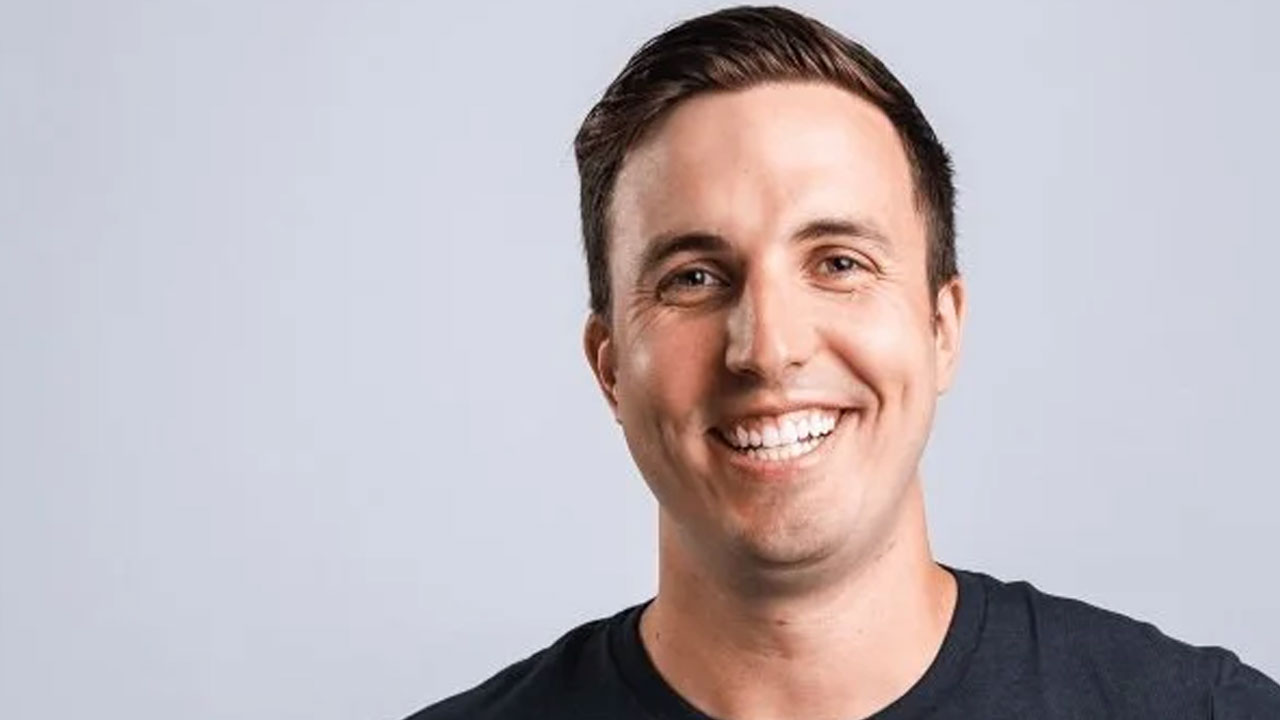
In this episode, Pete Martin talks with Troy Morris, co-founder and CEO of KMI, about building “tow trucks for space” and the company’s mission to keep space clear for future generations.
Season 3 Episode 1:
In this episode, Pete Martin talks with Troy Morris, co-founder and CEO of KMI, about building “tow trucks for space” and the company’s mission to keep space clear for future generations.
Troy discusses the growing challenge of orbital debris, why satellites need servicing and repositioning, and how KMI is developing spacecraft capable of moving objects in orbit. The conversation explores KMI’s REACCH technology, testing aboard the International Space Station, the growing commercial and national security opportunities around space infrastructure, and what sets the company’s approach apart in an increasingly active space economy.
Pete and Troy also discuss KMI’s roots in Michigan, the journey from Northern Michigan University to building the company in Marquette, and the importance of investors who bring more than capital to the table. Troy looks ahead to a future where in-space servicing becomes routine and KMI helps build the infrastructure needed to support a growing economy in orbit.
Host: Pete Martin
Guest: Troy Morris, Co-Founder, KMI
Producer: Jenna McNamara
Music: “Devil on Your Shoulder” by Will Harrison, licensed via Epidemic Sound
Stay connected with the MSU Research Foundation by following us on LinkedIn or subscribing to our email newsletters.
David Washburn:
Hey, it’s Dave. In today’s episode, Pete Martin, our director of Portfolio Management at the Foundation, is having a conversation with Troy Morris. Troy is one of the founders of KMI, a portfolio company of ours that does space logistics and, get this, orbital debris removal. I hope you enjoy this episode!
Pete Martin:
Hey everybody, Pete Martin here, back again with one of our great portfolio companies, KMI, and the founder, Troy Morris. Troy, how are you doing?
Troy Morris:
I’m doing great today. Thanks for having me, Pete. Good to see you, as always.
Pete Martin:
It’s a pleasure, man. So let’s learn a little bit more about you and KMI and what y’all are doing.
Troy Morris:
Yeah. At KMI, I get the pleasure of serving as one of the three co-founders and as CEO. We are building tow trucks for space.
That is the normal opening line that at least gets people’s interest up. “Wait, say that again?”
We are building spacecraft to move objects in space—not too dissimilar, but a lot more complicated than your neighborhood tow truck.
Pete Martin:
How the heck did you decide that tow trucks for space was, first of all, a problem; secondly, a problem worth solving; and third, a problem that had to be solved right now?
Troy Morris:
It’s been a problem since the second thing launched into space.
As much as humans love to see an open ocean and think, “We’ll just put a bunch of boats in there and sail across the world,” humanity did the same thing with space. And much like our oceans, where now there are rules of the road—port on this side, starboard on that—we started to realize that, yeah, space is really big, but there are only so many specific spots around our planet that are great for science and commerce.
A lot of people try to put a lot of different things into those same spots, and humans aren’t always perfect. Whether from mistakes, accidents or ignorance, things start to stack up: debris, old satellites from 20 years ago.
On the ocean, they float. On your highway, you break a wheel and pull off to the side. In space, they keep moving at 17,500 miles per hour as a minimum speed.
The thing that got Adam, Austin and me interested was that we were fascinated with space and working in aerospace-adjacent fields. Reusable launch rockets were going to make space accessible to everyone. Great—except there’s already this huge debris problem. There’s already this lack of mobility in space.
As much as I’d love being one of the people who says, “Now everyone can go to space,” that’s a big problem. If everyone goes at once and acts inappropriately, no one can go to space.
So it’s kind of taking care of it for ourselves and our future generations.
Pete Martin:
First of all, thank you, because I agree. You are taking care of space for everyone now and for generations to come. That is awesome.
But you mentioned your co-founders. How did you all meet?
Troy Morris:
We all met during undergrad at Northern Michigan University—you know, the first school people think about when they think about education in Michigan.
But it really was a great place for us. We all ended up there through different paths and journeys. Austin and Adam were randomly assigned as roommates in the dorms, and I was the older brother to Austin.
Austin is our chief technology officer today, but at the time he was a starting mechanical engineering student. He walked over to his roommate and said, “Hey, is that the Tsiolkovsky rocket equation on your whiteboard?”
I wish we’d had a recording, or at least a freaking Polaroid, of Adam—who was going to get his degree in computer and math and science—saying, “Yes. Why do you know that? Are we going to be friends?”
And we did. We became friends.
But it took about a decade from first meeting at school to starting the company at the level we’re at today. We’ve stood in each other’s weddings, but it all started back in Marquette, Michigan.
Pete Martin:
So you met in Marquette, and you said it took 10 years. I think I recall this correctly: You all left Michigan for a time. Is that correct?
Troy Morris:
Unfortunately and forcibly.
Adam went to New York, Austin to Philly, myself to Chicago, to pursue the corporate jobs. We wanted to earn those paychecks, but we also wanted to work on cool things. And at the time, you couldn’t do both in Marquette.
So, yeah, we were forced, like many others, to be part of that brain drain from Michigan.
Regretting it? I wouldn’t say minutes later, but definitely by the end of the first day, you’re like, “God, this just ain’t Michigan.”
Pete Martin:
Yeah. My own history was having to leave Michigan to build a career and being gone for much longer than I thought I would be. Then coming home and realizing that, yes, that brain drain did exist.
And now there’s a new trend. Michigan’s population is growing more than it has in the last 20 years. The city of Detroit is growing for the first time in 60 years—multiple years in a row of growth in Southeast Michigan.
So thank you for being part of the cool trend, which is: Yes, you can build really cool companies here and create really high-paying, great jobs in Marquette, Michigan, and in cities and towns all across Michigan.
Okay, one fun question. You met these guys in Marquette. Are you originally from Marquette? Where are you from?
Troy Morris:
No. All three of us are not even Michiganders, let alone Yoopers.
Austin and I grew up in the cornfields outside Chicago, and Adam was just a cornfield away over in Iowa. Having driven that road between us, it is just cornfields and one river.
None of us grew up here. We grew up in a very corn-fed part of the Midwest.
Then we discovered lakes and rivers and hiking and waterfalls, and we were like, “Well, hold a darn second. We can have our winters and natural beauty?” Literally didn’t know that was an option.
That was part of the beauty of Michigan that caught our attention. But it was the people that were why we stayed and why we wanted to come back.
Pete Martin:
I love it. Adopted Michiganders—you are welcome. You’re just the same.
Okay, back to the company and the product. Thank you for entertaining me.
Somebody has a satellite in space. That satellite experiences a problem. That’s when you come in, right? Who experiences this problem? What’s the issue, and how do you help?
Troy Morris:
I think the first part of “Who experiences this issue?” is: Think back to your own devices. Not just you, Pete, but the audience.
Have you ever had a phone, computer or TV that works forever? For most of us, no. Something breaks.
Technology is fantastic, magical and fickle. It’s much the same—to a higher degree—in space.
You’re not just dealing with the wear and tear of life. You have radiation coming from the stars and our sun. You have launch, which is one of the most destructive environments humans regularly put our technology through. It can sometimes rattle things apart.
And you have these devices that were designed 20 years ago, built 10 years ago, launched on a rocket and sent into the open environment of space against the sun, heat and cold.
Human things are faulty. Eventually something breaks, something runs out. Even if the system runs completely as engineered, you eventually run out of fuel.
I’ve yet to see a satellite that lasts forever.
KMI is offering the opportunity to go up and either keep that satellite where it is—if it’s taking pictures of the rainforest or watching for hurricanes, let it keep doing that even if it’s running low on fuel and the engine light is on—or, when it does fail, we’re there to grab it and safely get it out of the way.
Pete Martin:
So you can de-orbit a satellite as needed, or you can reposition a satellite. Super cool.
And I know the answer to this, but for fun: Have you been to space? Not you personally.
Troy Morris:
My face has been to space.
It was actually on the International Space Station during a conference we did a few years back when I was meeting the safety teams for our project that was up there.
So my face has been there. My name has been there on our experiment. Troy’s flesh and blood? Not yet.
I would go as a tourist in a minute. I have mad respect for the astronauts and the many people who earn their way to space. I’m waiting for it to be like a Disney trip. Let me just go take a picture with Mickey and come home.
But I myself have not yet been.
Pete Martin:
Well, one day. You’re a lot further than most people.
But your product has been to space.
Troy Morris:
Correct. We were fortunate, hardworking and lucky enough to build our initial technology known as REACCH.
We’ve got videos on our website. It is also the highest-performing ISS video on their Instagram. We’re at something like nearly 30 million views and almost a million likes.
It shows our multi-linkage tentacle technology grappling an unprepared object inside the space station.
Getting all the permissions and all the testing to not only get to the station, but then say, “We’re going to release this tentacle monster,” was quite a challenge.
But the controls and systems built by our wonderful team—and operated by our team with Suni Williams and other astronauts on hand—validated a thousand times over all that we’d been thinking and trying to prove. It’s right there in the videos.
Getting to operate on the space station was a bucket-list item I didn’t even have three years ago, let alone now that we’ve completed more than 20 hours of testing on the space station.
Pete Martin:
So your technology makes it to space. NASA astronauts test that technology in space and give you feedback.
And I think you were able to bring some of those astronauts back to Michigan, back to the U.P.
Troy Morris:
Yeah. Within weeks of Suni coming back to Earth—and there are some interesting stories to go find on Wikipedia about Suni Williams’ extra time in space—we had her come back to little Marquette.
We also have one of our advisors, Dr. Anna Fisher, who actually caught satellites during her own shuttle mission. So she had this amazing insight of, “Hey, humans have only done this a few times. I’m one of them.”
Then Suni Williams comes back to Marquette. She flew in expecting to walk over to the rental-car counter, and we had to inform her, “No, you should have ordered that a few weeks ago. One of us will go pick you up.”
So we gave her a personal ride from the airport.
Having her on-site with the engineers and the team was really enlightening. We also brought her out into the community, she spoke with students, we brought our parents up to meet her, and we even went cliff jumping at Black Rocks.
Of the many cool things you’re able to brag to Michiganders about: Yeah, we went swimming in Lake Superior with an astronaut. What else would you do?
But the insight we got from being with someone who was that close to our life and blood for years was incredible. She told us how it smelled when the experiment ran.
That was not a qualifier we ever needed to know.
We can see video. We can see the data platforms. We can do all this stuff. I never needed or wanted to know how it smelled—and now I’m so happy I know.
Much like a power tool, for those asking the next question. It smells like a power tool running, with all those different components running against each other.
Space itself apparently smells like seared steak and brake fluid, is what I’ve heard many times.
So, not the best scents you’ll ever have on Earth, but that’s why it’s not on Earth.
Suni has definitely been one of our favorite guests.
Pete Martin:
I love it.
So REACCH, your technology—you mentioned tow trucks for space, but it also has a tentacled arm, or arms, that it uses to grab onto other objects in space, other satellites, and reposition them.
What else is out there? Are you the only ones doing this? Are there other companies? And what separates you from the crowd?
Troy Morris:
There are a number of groups trying to do this around the world. This has been identified as a problem since Don Kessler was still active at NASA. He’s wonderfully retired and enjoying his well-deserved time on the beach.
There are groups in China, Switzerland, Japan and here in the United States working on different subsets of the problem.
One was the recent Catalyst mission to try to save NASA’s Swift Observatory in space. They’re trying some different techniques.
Then Northrop Grumman has a group that also launched recently. They’re doing a very—and I say this with absolute politeness to Rob and his team—slow-and-steady approach: We are building to perform servicing on GEO satellites way out there. Very expensive, very challenging.
At KMI, we’re looking to address that missing middle.
On one side, “We need to invest a whole bunch of money to try to do something quick.” That’s a Band-Aid. That’s great. It helps stop the bleeding today.
On the other side, “We’re planning this long, delicate surgery.” That’s also great when you have the time.
What we found from talking to our customers is that they want something in between: affordable, relative to space terms, and applicable to a wide variety of assets.
Between an emergency and planning surgery years in advance, there’s a middle. That’s where customers are demanding a solution.
Pete Martin:
How is all of the activity around space right now affecting you all?
Troy Morris:
It’s been really interesting.
For one, we’re getting a lot more financial questions than we were a year or two ago. We’re not even rocket scientists—we’re adjacent to rocket science, orbital dynamicists—but people are looking at how much money is being invested into this area and asking how it impacts us.
For the most part, it’s a rising tide.
We’ve seen a huge increase in inbound inquiries from potential investors, and we’re not actively raising right now. It’s like when you’re not hiring and you get inbound résumés from good people. It’s a good sign.
It shows there’s an appetite in the market.
There are some big things to come for KMI specifically, but also, I think, for the industry at large. Some of that comes from rising demand—not just SpaceX, but other launch companies, other ways to space and a number of novel activities in space.
Not just us and our tow-truck tentacle monster.
Pete Martin:
We’re seeing defense use cases, too. Let’s talk about that for a second.
In addition to moving things around, repositioning satellites and de-orbiting satellites that have reached their end of life, there are defense use cases for KMI as well.
Troy Morris:
Absolutely.
Defense was, I think, the first idea we ever had. The tagline of the company is still “keeping space clear for all.”
Defending human lives in space—I hope to never be in that life-or-death decision, and that things have been handled well enough that we don’t get there—but it’s a reality for us.
If we’re moving and protecting things so they don’t hit our satellites, so they don’t hit the satellite tracking a hurricane about to hit Florida, that’s defense for us.
There are more aspects that get closer to the national-security level. KMI has been significantly funded through SBIRs and STTRs with the United States government. We’ve been able to get access to testing and resources we would not have had alone.
And there are a lot of innovations that come from space tech. Whether that technology ends up directly in the pockets of GIs or guys and girls going off to the mall, there are a lot of different paths that happen from technology development.
So absolutely, we have dual-use applications for being able to protect and defend what’s floating in space.
We’re not exactly going to be on the battlefield tomorrow. That’s not really the design of this technology or its application. But keeping space clear for all is absolutely a defense need.
Pete Martin:
We’re seeing that a lot in Michigan because we have this historical expertise in defense.
There are a lot of companies in our portfolio and beyond that are building dual-use technologies here.
We run PitchMI, the state’s largest pitch competition, with $2 million in prizes. Really fun, really cool. For anyone listening, I highly encourage you to attend one of these events. They’re happening from September 15 through October 1 if you want to see some great companies being built in Michigan.
We have a defense and aerospace category for PitchMI this year because of how strongly that sector has come on over the last couple of years. You have Reindustrialize in Southeast Michigan, which is focused on advanced manufacturing, defense and dual-use technology.
I suspect we’re going to see a lot of great people at that event in Grand Rapids on the 15th. I hope you guys are able to make it, too.
You’re overqualified for PitchMI, but I do hope you’re able to attend.
Troy Morris:
Absolutely. It’s been on our calendar.
And I was like, if you’re not going to drop the city, I was going to. So thankfully you got yourself prepared, Pete.
We’re intending to have some of the team there. It’s just a question of whether it’ll be myself, one of the co-founders or one of our fantastic team members.
Thankfully, we’re not just in Marquette. We’ve got team members downstate, across the state and a few across the country. It’s nice that I don’t have to try to split in two or teleport to be at all these amazing events.
PitchMI is absolutely fantastic. I was glad I was able to even just view the stage a little bit at the Detroit experience last year. The groups I’ve met through it have been fantastic.
KMI might feel young to us still, but we’re almost middle-aged in this startup ecosystem. There are some new hotshots coming right out of the cradle, and they’re bringing amazing ideas and opportunities.
We’re just happy to play our part in this big ecosystem.
Pete Martin:
For listeners interested in aerospace and defense, show up to that event on September 15. There will be great companies there and great people involved in this industry, including the Office of Defense and Aerospace Innovation for the State of Michigan and others.
There are announcements that are not yet public that will be coming out between now and the 15th, so keep your eyes peeled—or show up on the 15th.
Speaking of announcements, you always have some news just on the horizon, some really cool things you’re doing. You don’t have to share anything publicly now, but is there a teaser you want to give folks listening?
Troy Morris:
From when we discussed when this plans to publish, there should be news—if it hasn’t already been released—in the next 48 hours or so.
KMI has been working for a long time with some national partners, including in the national-security ecosystem. The state of Michigan got involved with this coming announcement, along with some capital partners inside and outside the state.
It’s really about proving out the next stage of KMI’s growth.
We’ve been impatiently waiting on that news for almost this entire year. From our conversations, it has passed through the necessary secretaries at the administration level.
We’re very excited not just for what it proves and shows that we can build together, but for the chance to execute on it. As we did with our previous contracts to the ISS and our research, we come to play and we play hard. We will execute very well on those contracts.
It’s been a little bit of a badge of honor when we talk to some of these partners. They’re normally used to talking to tech companies from the West Coast or traditional aerospace locations in Texas or Florida.
Being able to prove that not only can we do it from the Midwest, but we do it on budget and ahead of time?
Oh, I enjoy hearing that from a customer every single time.
“No, no, no. Just say it one more time. Sorry, didn’t hear you in my good ear. Say how much you love us. You like us. The Midwest is great. Yes, thank you. And where do you think we’re based? Marquette, Michigan. There she is.”
We’re having a lot of fun with it.
Even while sitting on a few different announcements, that one will be a big relief to share with the whole world very soon.
Pete Martin:
Here’s some advice for founders listening.
I’ve seen some phenomenal pitch decks from startups and companies in our portfolio getting ready to raise their next round. The things that are always the most exciting are the really validating points.
If you can say, “Google introduced us to these people,” or, “I have this quote from astronauts at NASA telling us how cool our company is,” that’s extremely validating.
It shows that people who have a lot more knowledge than we necessarily do in a particular space love the thing you’re building.
Troy Morris:
I want to build on that for a second for the other founders—or if you’re just listening for the fun of supporting the Michigan ecosystem.
If you get good compliments from your boss or a customer in whatever you do—even if the daycare drop-off says, “Oh, you’re such a great parent”—write that down. Email it to yourself a week later or something.
Because we’re all human.
Sometimes it’s nice to have pick-me-ups, even if it’s not something you’re going to splash on the deck.
It’s okay to have a little victory lap, a little hall of fame.
“You know what? I am great. I am doing something awesome, and I’m the best at what I do.”
So that’s Talking with Troy. But peep back to the interview we’re doing here.
Pete Martin:
All right, let’s look ahead.
Let’s say it’s 10 years from now. It’s 2036. KMI is wildly successful.
What does that mean? What does the world look like if you’ve accomplished your dreams?
Troy Morris:
By 2036, KMI will be operating a number of these spacecraft in a number of orbits—to the point that it is politely boring.
Much the way that, for most of the world, rocket launches have become almost mundane. It’s hard to keep track of all of them because there’s so much happening in so many places.
That’s the goal for the next 10 years: Get these in-space operations to the level of mundane.
It’s still cool to the dorks like me. You see a cool train go past or a plane take off or land, and it’s still fun. But to the layman, it’s like, “Yeah, humans can do that. Of course.”
What we’re building in 2035 is the collection station, the operating platform in space.
It’s not like backpacking deep through the woods, where you’ve got to carry everything with you. It’s building that post, that position where you can bring supplies, bring a satellite, refuel them, refuel you and go do more stuff.
Actually building the infrastructure of space is something we’re already in conversations with partners about.
It’s not my mission to see whether we’re going to the moon or Mars. But it is our mission to be operating efficiently and effectively in low Earth orbit and just beyond there.
By 2035, I’m hoping we’re at least laying the “foundation” of these in-space collection stations.
Pete Martin:
I could see you guys going to Mars, too. You just hitch a ride on another satellite and reposition other things.
The sky is not the limit for you all.
Troy Morris:
The sky is the starting ground.
Pete Martin:
There you go.
We backed you guys pretty early. And when I say “we,” I mean the MSU Research Foundation. We committed to support you pretty early.
How has that journey been with us on the cap table? Have we been supportive?
This could go either way. It should be great. It should be great.
Who on the team have you enjoyed working with? What have we done for you? Anything particularly helpful?
Troy Morris:
One of the most helpful pieces—besides capital investment, which is always appreciated at the right times and on the right terms—is the internal insight you guys have across the team.
My favorite part is when you use that expertise to talk to us and tell us how we’re wrong.
Not just that we’re wrong, but really helping inform the KMI team.
We might come into a meeting with assumptions about real estate. Okay, great. You’ve got someone on the team. Boom. This is what he does day in, day out. These assumptions were right; these assumptions were wrong; here’s what you missed.
We all walk out of that meeting smarter, better and stronger.
Between initially working with Prem, to Matt and Tommy and yourself, and the team members who have been brought in for specific meetings and focuses, that’s been the huge value-add for us.
It is beyond the numbers on a check—which, again, are greatly appreciated. They keep our employees paid and coming back next week.
It’s having that insight.
You can go and get money from nearly anywhere. I don’t recommend the loan sharks down the street, but you can find partners to provide capital.
It’s finding the ones who actually bring the partnership part that is challenging.
MSU, under the different names—from Michigan Rise when we originally met, through Red Cedar and the Foundation today—has continued to help improve what KMI is today and what we’re trying to build tomorrow.
And despite all of our Michigan niceties to each other, we’re able to speak plainly.
“Hey, I want to tell you you’re a good kid, but here’s where you got it wrong.”
Thank you.
I think there are unfortunately too many people in this ecosystem who try to be nice to each other rather than helpful to each other.
You can be nice and helpful. But it’s almost harmful if you’re only nice and you’re not actually helping the person you’re working with.
Without getting too deep into specifics, I think that has made all the difference for us at KMI.
Pete Martin:
I appreciate that.
The goal here—yes, we’re the most active investor in the state. That’s great. But the goal is to be one of the most value-added investors that any one of our portfolio companies has.
We only do that by being really honest, as transparent as possible, legitimately making as many connections as we can and giving as much advice as we can.
From my perspective, you do pretty well at taking it all with a grain of salt. You take the things that work and disregard the rest, and that is totally fine.
That’s exactly what you should do as the founder of a company.
Okay, a couple more questions and then we’ll wrap it up. These are more fun.
You’re not building this solo. You’ve got great co-founders. You’ve also got a family and a little kid.
How is going down this crazy, awesome roller coaster of startup life and building a venture-backed company while having a little one at home?
Troy Morris:
I’ll turn to an answer I gave onstage when I got a similar question: “Oh my gosh, how did you guys, as such a small company, do this?”
The joking but honest answer was: “Well, we also have a newborn, so I wasn’t sleeping anyway. Might as well get some work done.”
With all the love to my little son and especially my darling wife, I sometimes think he’s my second-born because the startup takes so much time and energy and love and frustration and sleepless nights—as does the darling little baby boy that he is.
People often make analogies to what they know. Early on, it’s, “This is like dating,” or, “This is like marriage.”
Now, way too often, it’s, “Well, this is like raising a kid.”
Dropping off at daycare. Dropping off a data deck.
It is just my world, both when I clock in for work and when I get to clock in to be Dad in the afternoons, evenings and, lovingly, weekends.
They’re both full-time jobs. And somehow I’m still standing.
I think the advice is not that you can do it all.
The advice is: Find those around you who can help you do what you want.
That’s my parents—our baby’s grandparents—and, again, my lovingly supportive wife, Jenna.
This is all a team sport, whether you look at that as your village or your coworkers.
New parenthood and startup life: They’re both team sports.
Pete Martin:
I love it.
All right, one more. What’s your favorite space movie?
Troy Morris:
“Favorite” immediately pings off a dozen different answers. Favorite one to hate? Favorite one to enjoy?
I think my favorite space movie right now is The Martian.
I’ve had the pleasure of meeting the author, and before seeing Project Hail Mary, it was all talking about The Martian.
Orbital dynamics is something I actually know a little bit more about than growing potatoes on Mars.
But if I could pick just one space movie, I think that’d probably be the one right now.
I’m curious, Pete. Yourself?
What’s your favorite space movie?
Pete:
Well, The Martian is a really good one. I’ve seen that movie multiple times. Really, really good.
I still think it’s Armageddon, though, because I watched it growing up and it’s just so good.
It’s so good.
So, yeah. Armageddon. Bruce Willis.
Troy Morris:
I’m happy to tell you that was on the shortlist as I was whittling down my answer.
Armageddon, particularly the percussive maintenance of smacking things on the station.
Pete Martin:
Absolutely.
Troy Morris:
It is more real than you know.
Having spoken with many astronauts, especially outside the press cameras—oh gosh, is that the most realistic scene maybe in that entire movie.
But yeah, Armageddon is a contender. It’s a contender.
Pete Martin:
So good.
All right, Troy, where can people go to learn more about you and KMI?
Troy Morris:
We’ve simplified our web address. You can learn everything you want to know about us at kmi.space.
Easy to find, easy to say: kmi.space.
We’re active on social media, particularly LinkedIn. That’s the ecosystem for aerospace. That’s where we communicate with our peers. Sometimes LinkedIn is where I find out a fellow company has succeeded—or failed—at a launch, of all places.
But we’re also lovingly active in the community. We do mini tours of our facility in Marquette, Michigan.
So if you ever find yourself in the Grand Queen City of Lake Superior, reach out to us in advance. We’d love to give you the five-minute tour.
We’re doing big things, trying to change a big world, and we appreciate all the supporters who’ve helped us along the way and into this next stage.
Pete Martin:
Awesome. Troy, really appreciate you being on, man. Thank you so much.
Troy Morris:
I love being here, and I’m so excited for this second round of PitchMI and to see what other great companies are coming from our great state.
Thank you.
Latest Posts
October 1, 2026
September 24, 2026