May 12, 2026
PitchMI 2026: From Quarterfinals to Championship with Pete Martin
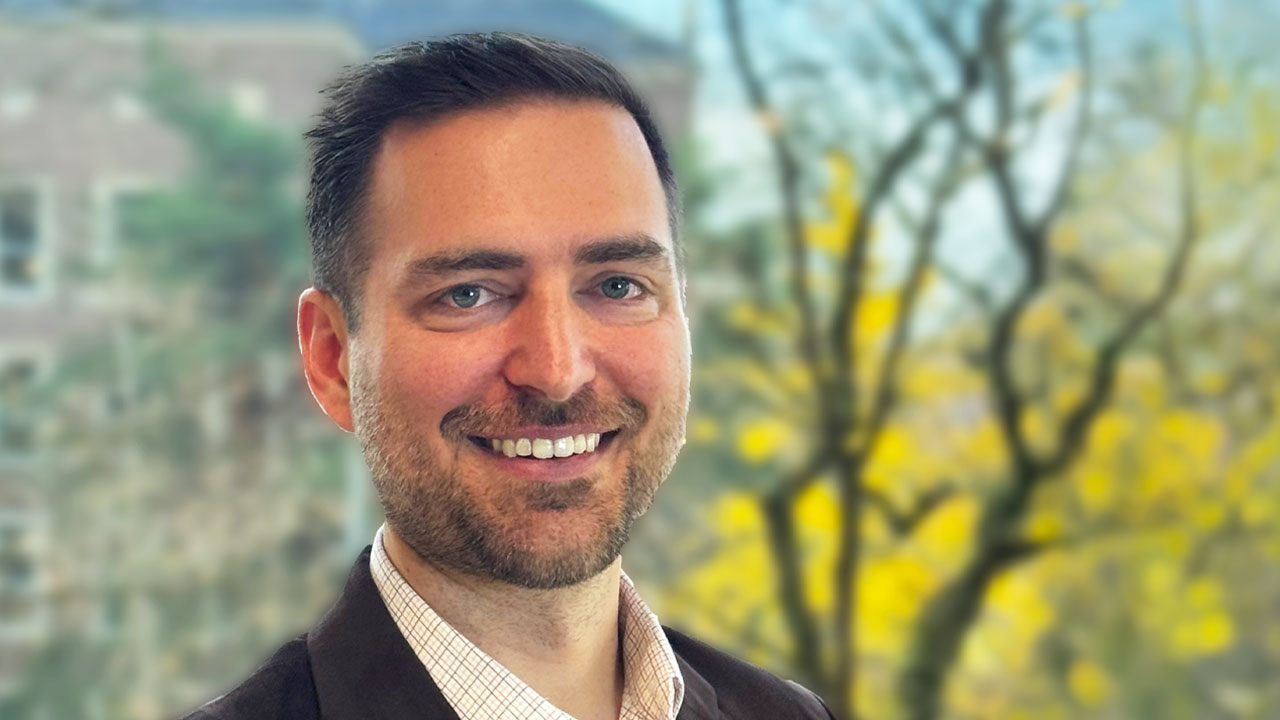
In this episode, we talk with Pete Martin, Director of Portfolio Management at the MSU Research Foundation, about the PitchMI competition—from the quarterfinal events held across Michigan to the championship in Lansing, where Adrenaline Interactive received a $1 million investment.
Season 2 Episode 12:
In this episode, David Washburn talks with Pete Martin, Director of Portfolio Management at the MSU Research Foundation, about the PitchMI competition—from the quarterfinal events held across Michigan to the championship in Lansing, where Adrenaline Interactive received a $1 million investment.
Pete reflects on the scale of the competition, which drew 375 startup applications from more than 100 communities across Michigan, and discusses the four finalist companies, the role of venture and ecosystem partners, and how the competition helped connect founders with investors, customers, and new opportunities for growth.
The conversation also looks ahead to the next PitchMI, including new quarterfinal events planned for fall 2026 and the MSU Research Foundation’s broader efforts to support startup growth across Michigan.
Host: David Washburn
Guest: Pete Martin, Director of Portfolio Management, MSU Research Foundation
Producers: Jenna McNamara and Doug Snitgen
Music: “Devil on Your Shoulder” by Will Harrison, licensed via Epidemic Sound
Stay connected with the MSU Research Foundation by following us on LinkedIn or subscribing to our email newsletters.
David Washburn:
Our episode today is with Pete Martin, Director of Portfolio Management here at the MSU Research Foundation. Pete led our team’s efforts to put on the PitchMI competition, so today’s episode is a recap of everything that happened — from the regional competitions to the finals in Lansing — and what’s ahead this fall and spring. I hope you enjoy it.
Welcome to the MSU Research Foundation podcast. My guest today is our friend Pete Martin. Pete orchestrated the PitchMI competition, and I thought it would be great to do a little recap.
Pete Martin:
Hi, Dave. How are you?
David Washburn:
Doing great. How are you?
Pete Martin:
It’s a good day.
David Washburn:
On Tuesday, April 7, we held one of the largest pitch competitions in the United States — certainly the largest in Michigan history — and one team walked away with a million-dollar investment. How exciting was that?
Pete Martin:
It was a heck of an event. It’s amazing to think about how we got here. We ended up awarding more than $2 million in prizes overall — actually more like $2.7 million when you include investment dollars and Google Cloud credits.
What’s really phenomenal is that founders across Michigan responded to it. We saw 375 companies apply from more than 100 cities and towns across both peninsulas. And getting to travel to four different cities in the fall and see the strengths Michigan has across so many industries — that may have been the coolest part.
A lot of people know Michigan for mobility, but there’s such a deep history of entrepreneurship here too, and PitchMI really showcased that.
David Washburn:
Yeah, the regional competitions each focused on different sectors. Grand Rapids was healthcare and life sciences, and Bed Connect emerged from that one.
Pete Martin:
Yep. Lindsay’s amazing.
David Washburn:
Traverse City focused on clean tech and outdoor innovation, and Electric Outdoors came out of that. Detroit was mobility, defense, and advanced manufacturing — that’s where General Orbit emerged. And Ann Arbor focused on AI and software, where Adrenaline Interactive came from.
Those four teams became the finalists.
Pete Martin:
And four really deserving companies.
David Washburn:
I thought all the pitches were fantastic. Honestly, if I’d been judging — and I’m glad I wasn’t — it would’ve been incredibly difficult.
Pete Martin:
Yeah, we were fortunate not to be in that room. A lot of people said judging was the hardest job that day, and they were absolutely right.
Max Albert from Adrenaline Interactive won the million-dollar investment, but afterward I had people come up to me passionately arguing that Bed Connect should’ve won. Others thought General Orbit should’ve won. Others said Electric Outdoors. I’ve legitimately had people tell me all four companies deserved the prize.
And honestly? I agree. All four could’ve justified a million-dollar investment. That really speaks to the quality of companies being built in Michigan. And it wasn’t just those four — we had 20 companies compete and hundreds apply.
There are a lot of great companies being built here.
David Washburn:
And even the quarterfinalists received $250,000 investments. Plus, many VC partners across the state jumped in during the regional competitions.
Pete Martin:
Yeah. Huge shoutout to Assembly Ventures. They committed in Detroit to co-invest alongside us in the winner there. eLab Ventures did the same thing in Ann Arbor, and Corewell Health Ventures participated in Grand Rapids.
It’s amazing to see private venture firms across Michigan willing to back founders the same way we are.
David Washburn:
So Adrenaline Interactive wins. Remind us what they do — and what’s next for them.
Pete Martin:
They’re an AI company focused on product placement inside video games.
Think about brands experimenting in gaming today — Domino’s did a campaign in Fortnite where players entered a virtual pizzeria and eating pizza gave them a speed boost. Brands have wanted to advertise in games for a long time, but historically it’s been expensive and complicated.
Adrenaline Interactive uses AI to make it almost as easy as uploading your logo. They can reskin assets inside games and track attribution all the way through to purchase behavior.
So a company can know somebody saw their brand multiple times in a game and later bought their product.
David Washburn:
That’s fascinating.
So what’s next for them? They won $250,000 regionally and then another million in the finals.
Pete Martin:
Right. They received $250,000 from us, another $125,000 from eLab Ventures, plus substantial Google Cloud support through their AI program. Then the million-dollar championship investment.
Now the focus is helping them build momentum and make connections. We’ve already introduced them to Michigan brands that should be advertising in gaming.
I actually connected Max with a consumer products company in Traverse City just last week during Northern Michigan Startup Week. They’d grown revenue 10x last year and wanted more brand visibility. Max and that founder are now working together.
That’s really the goal now — opening doors for them while this momentum is building.
They’re hiring, scaling their sales efforts, and they have some exciting partnerships they’ll announce this summer.
David Washburn:
So it’s not just the capital — it’s the connectivity too.
But we’re not done with PitchMI, are we?
Pete Martin:
Not at all. I’m super excited we get to do this again.
The next round starts this fall. September 15 we’ll be in Grand Rapids for defense and aerospace. Then September 22 we’ll do AI and software in Kalamazoo.
September 24 is especially exciting — advanced manufacturing, materials, and outdoor innovation will take place in Marquette in the UP. That’ll actually be the largest pitch competition prize ever held in the Upper Peninsula, so we get to make a little more history.
Then October 1 we’ll host healthcare and life sciences in Detroit.
David Washburn:
And then another championship after that?
Pete Martin:
Exactly. Date and location are still to be announced.
David Washburn:
There’s already a lot of exciting activity happening in the UP.
Pete Martin:
Absolutely. One thing I really love is that these events stack around other ecosystem events happening across the state.
So when we’re in Grand Rapids or Kalamazoo or Marquette or Detroit, it’s not just our competition. There are all kinds of events happening around it.
Same thing with the championship in Lansing during 517 Entrepreneurship & Innovation Week. There was activity all around it.
So if someone’s wondering whether it’s worth attending — absolutely attend. You can plug into the broader startup ecosystem while you’re there.
David Washburn:
How many people attended the finals in Lansing?
Pete Martin:
We capped registration at 500 people, and we hit that limit. It was standing room only.
David Washburn:
And we brought in some interesting judges too — people from the coasts.
Pete Martin:
Yeah, and that was intentional.
For the regional competitions, we used ecosystem partners and judges from around Michigan. But by the championship, we already knew these companies. Many were already portfolio companies.
So we wanted outside investors — experienced coastal VCs who didn’t know the founders personally. We wanted them to see the quality of companies being built here.
And afterward they told us how impressed they were — not just with the event, but with the companies themselves.
David Washburn:
I heard the same thing. And they definitely struggled with choosing a winner.
Pete Martin:
Which maybe makes them feel a little better knowing everybody else struggled too.
One thing I loved most about this competition was spacing the championship six months after the regional rounds. It gave us time to work with these companies and watch them grow.
General Orbit is a great example. They originally pitched a company focused on making satellites cheaper and easier to build. Then over a few months — through customer discovery and work with investors like Assembly Ventures — they realized the bigger opportunity was their magnetometer technology.
It can read Earth’s magnetic field and determine location without relying on satellites. Basically GPS without GPS.
The ceiling for that is enormous.
Watching that evolution over just a few months was incredible.
And all four companies showed real momentum. Bed Connect closed a multi-million-dollar round after winning in the fall. Electric Outdoors continues deploying technology across the country.
Giving founders time to build between rounds made the championship much stronger.
David Washburn:
As we wrap up, who do we want to thank?
Pete Martin:
First, some incredible people who showed up.
Governor Whitmer surprised everybody by attending. Even more importantly, she spent about 15–20 minutes backstage talking one-on-one with the four finalists. We somehow managed to keep it a secret from them.
You can’t really put a dollar value on that kind of access.
Mayor Andy Schor was there. MSU President Kevin Guskiewicz attended the entire event. Provost Laura Lee McIntyre was there too.
It was really powerful seeing leaders from across Lansing and across Michigan come together around entrepreneurship.
We also had more than 30 organizations supporting the effort. Assembly Ventures, eLab Ventures, Corewell Health Ventures, the Michigan Innovation Fund coalition members, Midwest House, the Michigan Venture Capital Association — so many people contributed.
One especially fun piece: we brought in actor Mark Evan Jackson to do an improv workshop with the founders. It was hilarious, but also genuinely valuable because startup founders constantly have to think on their feet.
And finally, none of this happens without the Michigan Economic Development Corporation. They were essentially the title sponsor for the competition and worked with us constantly throughout the process.
Their support — and the support of their media partners at FINN Partners — helped push this beyond Michigan and onto a national stage.
David Washburn:
If I’m a founder listening to this, how do I position myself to compete next year?
Pete Martin:
Applications aren’t open yet — they’ll launch this summer — but follow the MSU Research Foundation on LinkedIn or subscribe on our website and you’ll hear about it.
But honestly, the best thing founders can do is get involved in the ecosystem now.
Go to events. Build relationships. Founders Fridays is a great example — founders gathering locally across multiple Michigan cities.
There are pitch competitions all over the state. TCNewTech in Traverse City just hosted a two-day AI hackathon where teams built products from scratch in 48 hours.
There are AI clubs at MSU and U of M. There are angel groups, venture firms, organizations like New Enterprise Forum.
And our team is everywhere — Detroit, Ann Arbor, Grand Rapids, Lansing, Traverse City, the UP. This organization exists to help commercialize technology across Michigan.
We host free events every month. Show up, get connected, and we’ll help connect you to everyone else.
David Washburn:
One last thing we should clarify: when companies receive these investments, where does the funding come from?
Pete Martin:
Good question.
The investments come from a combination of the State of Michigan and the MSU Research Foundation through Michigan Rise. And when possible, we bring in private co-investors too.
This isn’t a national competition. It may be one of the largest startup prizes in the country, but it’s specifically for Michigan-based companies.
You have to be headquartered here because we believe in Michigan founders. We’ve seen the quality of founders here rise tremendously, and we believe many more major companies will be built in Michigan.
David Washburn:
Officially, the investments are made through Michigan Rise, a wholly owned subsidiary of the MSU Research Foundation.
Our guest today has been Pete Martin, Director of Portfolio Management at the MSU Research Foundation and lead organizer of the PitchMI competition.
Pete, thanks for being here. Great job. Really exciting stuff.
Pete Martin:
Always a pleasure, Dave. Looking forward to the next one.
Latest Posts
September 18, 2026
September 8, 2026