May 19, 2026
Tech Transfer, Startups, and the MIT Ecosystem
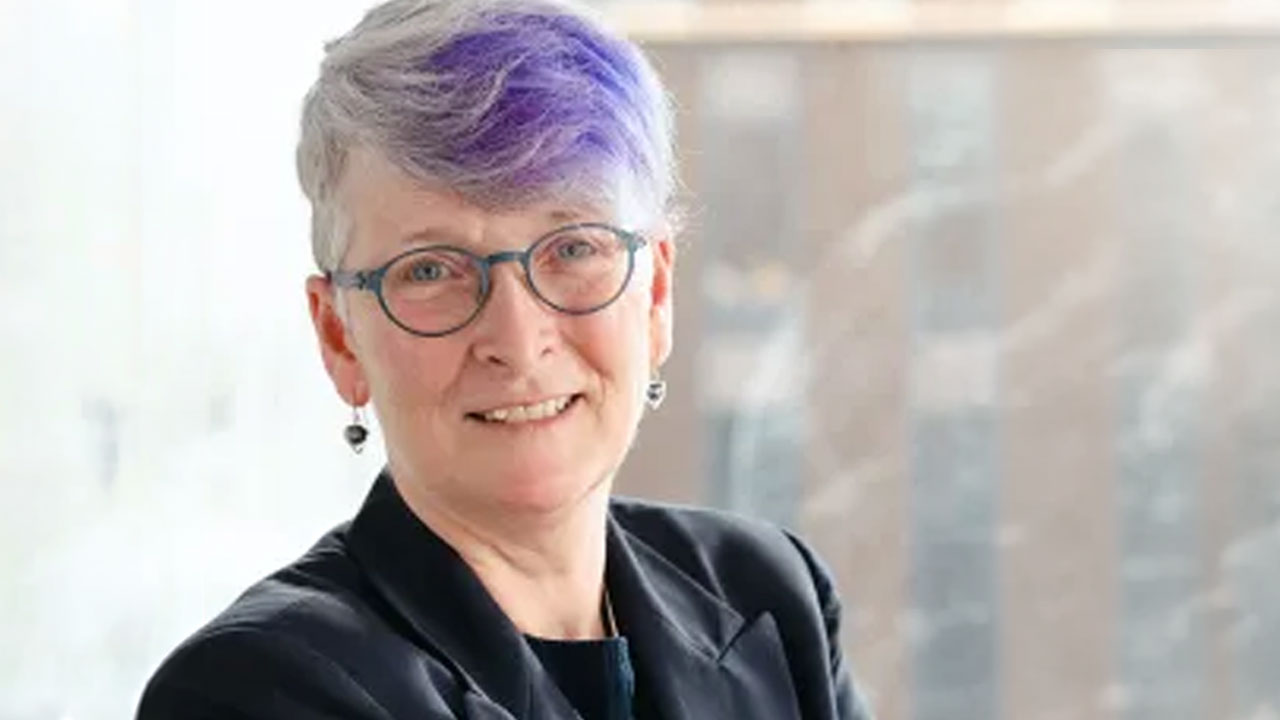
In this episode, we talk with Lesley Millar-Nicholson, Executive Director of the Technology Licensing Office at Massachusetts Institute of Technology, about university commercialization, startup creation, and the differences between innovation ecosystems in the Midwest and Boston.
Season 2 Episode 13:
In this episode, David Washburn talks with Lesley Millar-Nicholson, Executive Director of the Technology Licensing Office at Massachusetts Institute of Technology, about university commercialization, startup creation, and the differences between innovation ecosystems in the Midwest and Boston.
Lesley reflects on her career in technology transfer, including her time at the University of Illinois Urbana-Champaign, and discusses how universities support researchers and entrepreneurs through licensing, startup development, and long-term ecosystem building. The conversation explores the challenges of commercialization, the complexity of university intellectual property, and why relationships and education remain central to successful tech transfer.
David and Lesley also discuss startup licensing models, incubator networks, venture activity around research universities, and the importance of storytelling in demonstrating the real-world impact of university innovation—with a brief detour into 3D-printed ice cream.
Host: David Washburn
Guest: Lesley Millar-Nicholson, Executive Director, MIT Technology Licensing Office
Producers: Jenna McNamara and Doug Snitgen
Music: “Devil on Your Shoulder” by Will Harrison, licensed via Epidemic Sound
Stay connected with the MSU Research Foundation by following us on LinkedIn or subscribing to our email newsletters.
David Washburn:
My conversation today is with Lesley Millar-Nicholson, executive director of the Technology Licensing Office at MIT. Lesley and I worked together for many years, and we had a wide-ranging conversation about the differences between doing licensing and commercialization in the Midwest versus the Boston ecosystem. It gets a little technical at times, but it’s a fun discussion — including a very important conversation about ice cream. Enjoy.
—
David Washburn:
Welcome to the MSU Research Foundation podcast. Today, my guest is Lesley Millar-Nicholson. Lesley is the executive director of the Technology Licensing Office at MIT. She leads a large team responsible for identifying, protecting, marketing, and licensing technologies coming out of one of the premier science institutions in the country. Welcome, Lesley.
Lesley Millar-Nicholson:
Thank you so much for the invitation, David. Lovely to talk to you.
David Washburn:
In full disclosure for our listeners, Lesley and I spent a number of years together at the University of Illinois. At one point our offices were right next door to each other before we both moved on to different places. It’s great to catch up.
I was trying to think — how long have you been leading the TLO at MIT now?
Lesley Millar-Nicholson:
Just under 10 years, which is a milestone I can’t quite believe. I can confirm I have not aged one year.
David Washburn:
Of course not.
It must be fun working in the Cambridge ecosystem. I was reviewing your office statistics — the research engine at MIT speaks for itself, but the number of disclosures, startups, and transactions is really impressive. Tell me about the office. How big is the team, and how are you organized?
Lesley Millar-Nicholson:
Our office has existed in some form since around 1940. Right now we’re about 58 people. I actually counted last night.
I’ll also give a nod to the support I’ve received from the vice president for research over the past couple of years. MIT still has a hiring freeze, but I’ve been allowed to hire into some new positions to advance a reorganization vision I’ve had.
Structurally, we’re moving away from a cradle-to-grave model toward more functional support teams so our licensing officers can focus on licensing. About half the office is dedicated to licensing, either senior officers or associates supporting them. We also have an IP team, finance, federal compliance, operations, HR, IT, and a small but excellent marketing and communications team.
David Washburn:
That’s a substantial group. And your team produces great work — I was looking through your annual report earlier. It’s beautifully done.
Lesley Millar-Nicholson:
Thank you. Mark Homs and a lot of contributors deserve credit for that.
Telling our story is incredibly important, and frankly I think tech transfer professionals are often too modest about the impact of the work. A tremendous amount happens behind the scenes to move technologies into the hands of people who can actually develop them.
David Washburn:
I completely agree. We’ve been working on more storytelling here as well. Tech transfer can be chaotic and messy — discoveries emerge from labs, and then there’s this massive challenge of getting them to market. That “valley of death” is where we all operate.
There are lots of opportunities for success, but also a lot of pitfalls to navigate. And telling these stories matters, especially when you’re trying to help legislators and policymakers understand why continued investment in research is important.
Lesley Millar-Nicholson:
Absolutely. And part of the challenge is helping people understand the time horizon involved.
This work requires patient capital, long-term commitment, and investment not just in dollars, but in people and infrastructure. Most things won’t succeed. Maybe one in a hundred does. Maybe ten. But if you expect quick returns, this is the wrong business.
One of the blessings at institutions like MIT — and many major research universities — is leadership that understands we’re doing this in support of a broader mission: sharing knowledge, educating students, supporting entrepreneurship, and creating impact in many different forms.
David Washburn:
It’s definitely a long game. Sometimes people on the outside ask, “Why can’t this happen faster?” You might get lucky and have a few breakout years, but generally this takes time.
MIT has been doing this since the 1940s. Our group started in 1973, so we’re still young by comparison.
Lesley Millar-Nicholson:
But we all learn from each other. There are many different ways to build innovation ecosystems, especially now with government initiatives encouraging regional economic development and entrepreneurship.
As we talked about earlier, MIT benefits from a vibrant ecosystem. But that also means we can’t become complacent. We still have to prove our value and engage meaningfully with researchers and entrepreneurs.
And sometimes the outcomes surprise you. A few days ago, a major pharma company acquired one of our startups. You can’t plan for things like that.
David Washburn:
If you try to plan for them too precisely, you’re probably setting yourself up for disappointment.
I wanted to ask you about startups specifically. Your report mentioned 38 startup licenses last year, which is remarkable.
You spent years in the Midwest before moving to Cambridge. In the Midwest, especially among Big Ten schools, universities tend to build extensive systems of support — entrepreneurial programs, grant assistance, talent recruitment, EIRs, and so on — because the surrounding ecosystem isn’t naturally as dense.
Boston obviously has a much richer talent and capital environment. How do you compare those experiences?
Lesley Millar-Nicholson:
One of the biggest differences is simply having to fight for attention.
I remember literally pounding the pavement with technology briefs, trying to convince investors to come to Champaign-Urbana. People would happily fly from Chicago to San Francisco or Boston, but they wouldn’t drive down I-57 to visit campus — despite the incredible research happening there.
So we took the show on the road. We organized innovation showcases in Chicago and San Francisco to demonstrate the quality of the work.
At MIT, you benefit from brand recognition and an expectation that great research and entrepreneurship are happening. People come to you. That fundamentally changes how a tech transfer office operates.
The second difference is talent density. In Illinois, we sometimes had to fly entrepreneurs-in-residence into town because we couldn’t find experienced startup leadership locally.
In Cambridge, talent is everywhere. Not that it’s easy — startups still struggle to find the right people — but there’s an enormous alumni network and entrepreneurial community willing to help.
And that’s before you even consider the student startup ecosystem. If you think 38 startups is a large number, there are probably hundreds more emerging from MIT programs that don’t involve MIT-owned IP at all.
David Washburn:
That’s fascinating.
Lesley Millar-Nicholson:
One thing I tell people when they ask, “How can we become MIT?” is: don’t try.
You’re not Boston. And that’s okay.
Instead, look at places that successfully built ecosystems from scratch — places like Champaign-Urbana. Study how they created capacity, partnerships, and momentum. That’s a far more useful model for most universities.
David Washburn:
I completely agree.
Many universities are more like Big Ten or SEC schools — great campuses in smaller metro areas — not Kendall Square. So they need different strategies.
We’ve done similar things in Michigan, building entrepreneur-in-residence and mentor programs and pulling talent from around the state. Fortunately, Lansing is pretty accessible geographically.
Lesley Millar-Nicholson:
And those intentional efforts matter enormously.
One thing I’ve observed over the years is that universities often expect the tech transfer office to provide every entrepreneurial resource imaginable. I’m not convinced that’s the right model.
Licensing professionals serve a very specific function. Company-building support, entrepreneurial mentorship, operational startup assistance — those are different skill sets.
I personally don’t think everything should live under one roof. Some institutions make it work, but generally I think separation creates healthier systems.
David Washburn:
That’s a really interesting perspective.
I also wanted to ask about standardized startup licenses. Over the years, there’s been a push in some circles toward “express” startup licensing models. Where do you stand on that?
Lesley Millar-Nicholson:
We use express agreements for certain things — especially software end-user licenses. Those are very streamlined and downloadable.
But startup express licenses? I’m skeptical.
People focus heavily on speed, but what gets lost is the education, the relationship-building, and the understanding of mutual interests.
A startup license can govern a 20-year relationship if patents are involved. Why would you want to rush that?
That doesn’t mean negotiations should drag on unnecessarily. In fact, I get very frustrated when people suggest universities intentionally slow deals down as a tactic. That’s absolutely not what we do.
Usually delays come from miscommunication. People email past each other instead of sitting down and talking openly about concerns and priorities.
Relationships matter.
David Washburn:
I appreciate speed, but I also appreciate thoughtful deal-making. Different technologies and industries require different approaches.
One thing that stood out in your report was how many startups remain headquartered near MIT. Does the market simply absorb them into incubators and lab spaces, or does MIT manage those facilities directly?
Lesley Millar-Nicholson:
MIT itself doesn’t really operate a traditional incubator, although MIT.nano provides semiconductor lab access to startups that otherwise couldn’t afford it.
But the ecosystem here is packed with landing spots: CIC, LabCentral, Greentown Labs, MassRobotics, The Engine — the list goes on.
We generally act more like a signpost than a traffic cop. We know the ecosystem well, but we’re careful not to endorse one organization over another.
That said, Kendall Square has become incredibly expensive. During the pandemic, construction never stopped. Google built a huge new building, more labs went up, and rents soared.
So now we’re seeing incubators spread outward from Kendall Square into nearby neighborhoods and surrounding cities.
David Washburn:
You’re basically ecosystem navigators.
Lesley Millar-Nicholson:
Exactly. Very large signposts.
David Washburn:
Another thing I’m curious about: MIT doesn’t have a medical school, yet there’s tremendous life sciences output connected to the institution. How does the TLO fit into all those collaborations?
Lesley Millar-Nicholson:
This actually ties directly back to the Midwest-versus-Cambridge comparison.
At Illinois, we dealt with relatively few jointly owned inventions. At MIT, joint ownership is everywhere.
Faculty may have appointments at Mass General, Harvard, Beth Israel, or elsewhere. So inventions may be jointly assigned between institutions.
That means before we can even file a patent, we have to untangle funding sources, inventorship, assignment rights, sponsor obligations, and interinstitutional agreements.
People sometimes imagine tech transfer as: invention disclosure comes in, patent gets filed, startup gets formed.
In reality, there’s an enormous amount of coordination and negotiation behind the scenes before you ever get to licensing.
David Washburn:
I find this endlessly fascinating.
Lesley Millar-Nicholson:
Welcome behind the curtain of tech transfer.
David Washburn:
It sounds like your percentage of jointly owned IP must be dramatically higher.
Lesley Millar-Nicholson:
Very much so.
And then you layer in Howard Hughes investigators, corporate sponsors, Gates Foundation funding with global access requirements — every agreement comes with its own complexities.
There’s a massive checklist before you can even think about licensing something.
David Washburn:
Tell me about the venture community around MIT. Are investors constantly circling the office looking for the next big thing?
Lesley Millar-Nicholson:
Some are attached directly to faculty members. In many cases, they know about an invention before we do.
We’ve literally had disclosures come in where the founders already have a $50 million financing lined up and are asking, “Can we get the license now?”
That would be unheard of in many places.
Then there are alumni investors looking broadly at the ecosystem. Those conversations can be harder because we can’t just walk them through 12,000 patents and say, “Pick one.”
Usually the successful startups involve faculty, graduate students, or postdocs already deeply connected to the technology.
And then there’s another category entirely: people who think universities are desperate for cash and want to monetize large portions of our IP portfolios.
Those conversations can get… interesting.
David Washburn:
That topic alone could probably fill an entire podcast series.
Lesley Millar-Nicholson:
Probably.
David Washburn:
Before we wrap up, I have to ask about something I saw in your annual report.
You know I’m an ice cream person.
There was a disclosure involving 3D-printed ice cream. I need to hear more about this.
Lesley Millar-Nicholson:
I should have reviewed the report before this interview.
But yes — and honestly, Dave, your listeners really need to see the visual. That’s the best part.
I don’t remember all the details, but it was fantastic.
David Washburn:
I sincerely hope there’s a path to commercialization for this technology. I want to walk into a shop someday and 3D-print my own ice cream.
Lesley Millar-Nicholson:
Or cakes. We should definitely pursue cakes too.
Actually, that connects to another area people don’t realize we manage: MIT trademarks.
We oversee the trademark program, which is admittedly modest compared to the Big Ten schools of the world. The MIT beaver is famous in its own circles.
But now I’m thinking maybe we should combine the trademarks with the 3D-printed ice cream technology and launch MIT ice cream cakes.
David Washburn:
Many land-grant universities already take ice cream very seriously.
MSU has a famous dairy store with incredible flavors. UConn has its dairy bar. These are important institutional assets.
Lesley Millar-Nicholson:
These are extremely important things.
David Washburn:
My guest today has been Lesley Millar-Nicholson, executive director of the Technology Licensing Office at MIT.
We could probably keep talking for hours, but we’ll spare everyone. Lesley, great catching up with you. Thanks for being here.
Latest Posts
October 1, 2026
September 24, 2026