SHARE
May 5, 2026
How One Startup Is Turning Customer Referrals Into a Scalable Growth Engine
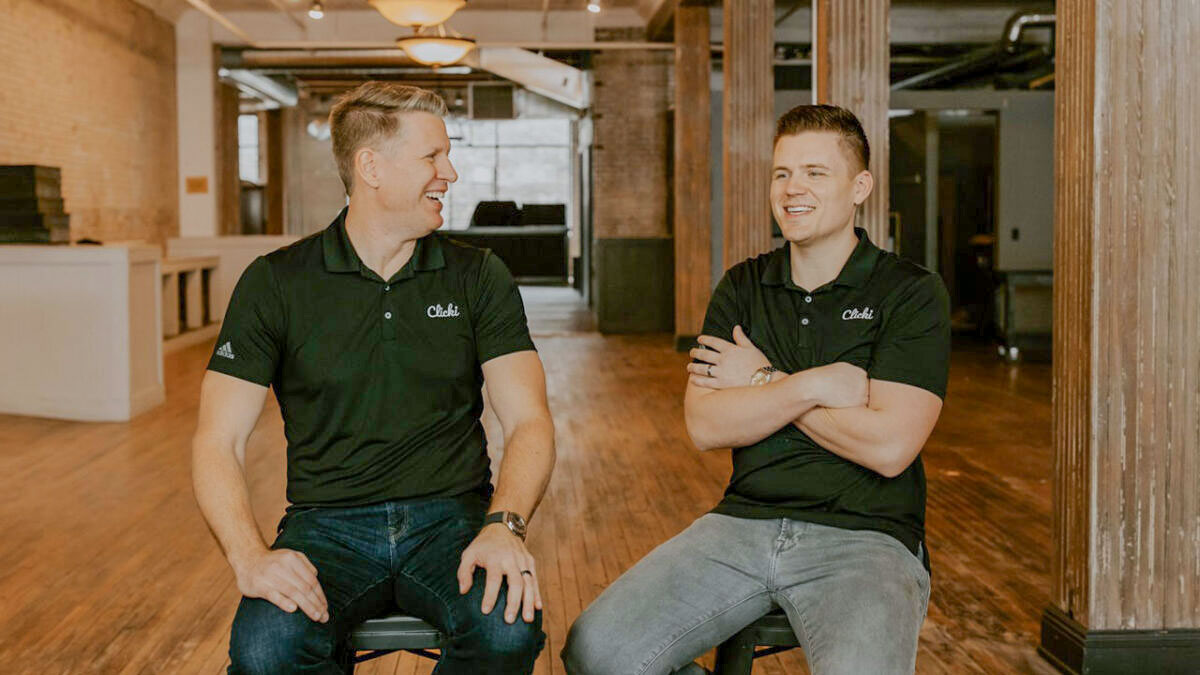
Built on firsthand operator experience, Clicki helps businesses turn referrals into a more structured and measurable way to grow—reducing reliance on paid advertising.
Kendall Hines was sending so many referral payments through Venmo that his account got flagged for suspicious activity.
But he wasn’t running a scam—he was growing a small business.
At the time, Hines and his wife had just launched a beauty studio. Like most new businesses, they relied on digital ads to bring in customers, but the costs added up quickly.
“We were spending $5,000 every month on Google ads,” Hines said. “For a startup, that’s one of your biggest expenses.”
They already had hundreds of satisfied customers telling friends and sharing their experiences, yet none of that momentum was being captured.
“So I started thinking—if I’m going to spend that money anyway, why not give it to them instead of big tech?”
He began paying customers directly for referrals—creating simple links, tracking who shared them, and manually sending payments when new bookings came in. It wasn’t efficient, and it certainly wasn’t scalable. But it worked.
“I was literally sending Venmos myself,” he said. “When I started sending so many that they flagged my account, that’s when I knew—okay, there’s something here.”
That experiment became the foundation for Clicki Referrals.
The High Cost of Customer Acquisition
For many service businesses—like lawn care, pest control, or home cleaning—growth follows a familiar path: spend more on digital advertising.
“It seems like the only choice for growth is to pay Google or Facebook more money,” Hines said. “And it’s more expensive than ever—$200 to $500 to acquire a single customer in some industries.”
Hines had seen this pattern before. Over the past decade, he grew a lawn care company from 90 to 2,000 customers and later built and sold a software company serving similar businesses. Each time, growth depended heavily on paid acquisition—when results slowed, the answer was almost always to increase the budget.
“We think there should be a third door,” he said.
Turning Word-of-Mouth Into a System
Clicki Referrals was built around a simple shift: instead of paying advertisers to find new customers, businesses can pay the people who already believe in them.
The platform turns what is typically informal into something structured—generating personalized referral links, tracking conversions, and automatically sending rewards through Venmo, prepaid cards, or direct deposit. It also changes the role of the customer, turning them into an active part of how the business grows.
“If you’re paying $500 to acquire a customer through ads, or $100 to a customer who refers someone, that’s a big difference,” Hines said. “That’s money you can put back into your business.”
In some cases, that difference compounds quickly. One pest control startup in Arizona reached more than 1,300 customers and nearly $700,000 in revenue in its first year without relying on Google or Facebook ads, with roughly half of its customers coming through referrals.
Not every business follows that trajectory, but the example points to what’s possible when referrals move from informal to structured and measurable.
A Full-Circle Moment
What began as a workaround for a single business has expanded into a platform used by hundreds of companies across the U.S. and Canada, particularly in home services, where trust and local reputation carry weight. Adoption has been driven less by marketing and more by results, as companies look for ways to reduce reliance on paid channels without sacrificing growth.
For Hines, that growth connects back to where his career started.
Before building and selling his first company, he was a student at Michigan State University, studying in the lawn and landscape program while helping grow his family’s lawn care business. At a certain point, the pull to build became stronger than the classroom.
“I remember sitting in class while my phone was blowing up with customers,” Hines said. “And I just thought—this is a real opportunity. I can always come back, but I need to go build this now.”
Years later, that path intersected with the broader MSU innovation ecosystem when Hines participated in the Conquer Accelerator. The entrepreneurial program, operated by the MSU Research Foundation, provided early feedback that helped shape Clicki’s direction.
“It’s kind of a full-circle moment,” he said. “I left MSU to go build something, and now the same ecosystem is helping us scale it.”
Today, the company operates out of The Bridge incubator in Grand Rapids—part of the MSU Research Foundation’s research park network—and has received investment support through Michigan Rise, its venture investment subsidiary.
“The MSU Research Foundation was one of the first to say yes,” Hines said. “And that early support matters more than people think.”
A Different Way to Grow
For Hines, the idea isn’t complicated.
“It’s about helping small businesses grow faster without just spending more on ads,” he said. “That means more margin, more opportunity, and more impact in the communities they’re in.”
For companies rethinking how they acquire and retain customers, Clicki is building tools that turn those relationships into a more consistent source of growth.
Learn more at joinclicki.com.
Written by Doug Snitgen.
Latest Posts
September 18, 2026
September 8, 2026