David Washburn
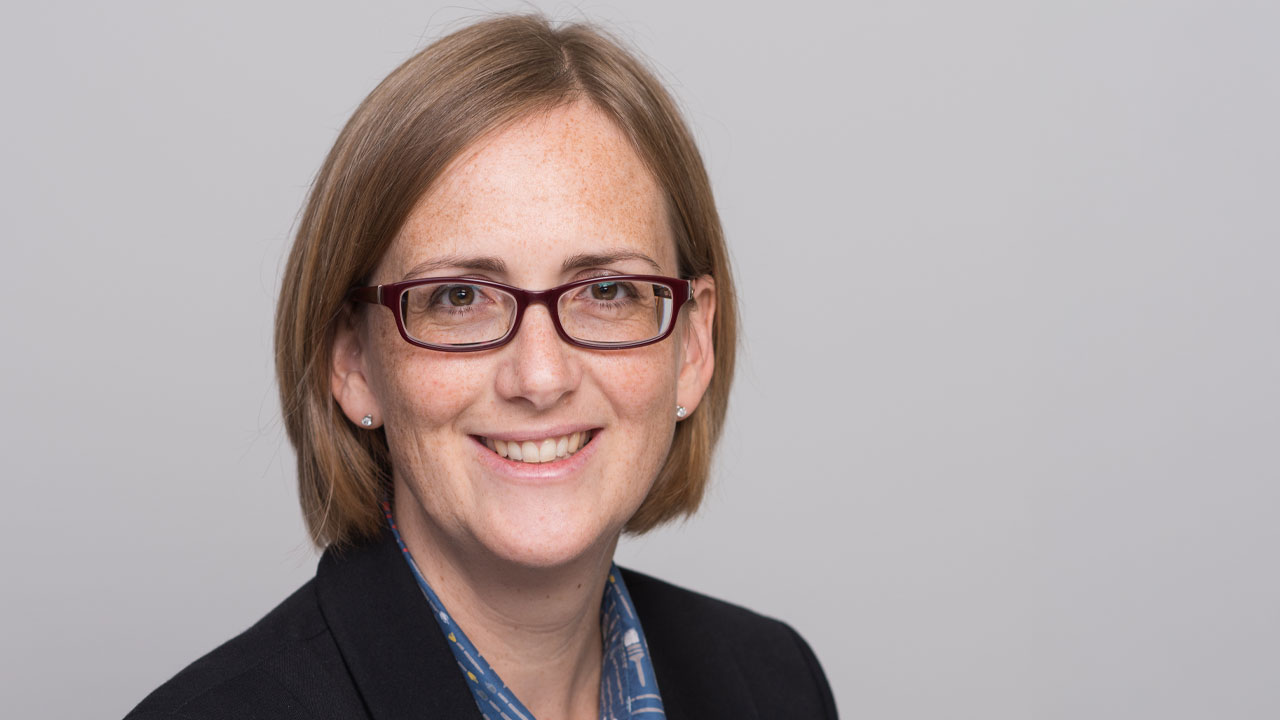
I’m excited for you to hear today’s conversation with Dr. Mairi Gibbs. She’s the CEO of Oxford University Innovation in the UK, where she’s been since 2002. She oversees the full commercialization ecosystem—partnerships, spinouts, licensing, academic engagement, IP, the whole thing. I hope you enjoy it.
Welcome to the MSU Research Foundation podcast. Today I’m joined by Dr. Mairi Gibbs, CEO of Oxford University Innovation. Mairi, welcome.
Mairi Gibbs
Thank you—great to be here.
David Washburn
OUI does a lot of what we do—supporting tech commercialization and economic development—so I’m excited to compare notes. Before we get into that, could you share a bit about your background?
Mairi Gibbs
Sure. I started as a chemist—undergrad and PhD at Oxford—and spent a few years in industry leading a team of industrial chemists. I joined what was then ISIS Innovation in 2002 as a licensing and ventures manager, working with academics on IP protection, licensing, and spinouts.
That was—somewhat alarmingly—almost 24 years ago. I’ve had six roles in the same organization: licensing, team leadership, operations, COO, and now CEO. So I know Oxford tech transfer from pretty much every angle, though I’ve never done it anywhere else—which gives me a very specific perspective.
David Washburn
That’s great. I got into this around the same time—post–dot-com crash. I thought I’d consult in licensing for a bit and then go back to startups. Twenty-five years later, here we are.
Mairi Gibbs
I came in with a three-year plan. That didn’t quite pan out either.
David Washburn
What’s been interesting is how the field has evolved—from disclosure, protect, license—to a much broader set of activities. I assume you’ve seen the same at Oxford.
Mairi Gibbs
Absolutely. The scope has expanded significantly. At Oxford, we’ve long been involved in what we’d now call ecosystem building—creating the environment for economic growth around the university.
Historically, we had to be very hands-on. We didn’t have a ready supply of venture builders, investors, or experienced entrepreneurs coming into the university. If an academic wanted to build a company, we were the ones helping them figure it out.
The language has evolved too. We’ve moved from “technology transfer” to “knowledge exchange,” and we now work across all disciplines—including social sciences, humanities, even libraries and museums. We support social enterprises, consultancy, partnerships—it’s much more explicitly about impact now.
David Washburn
That resonates. Let’s talk about company creation. I was looking at your annual report—it’s been a busy decade.
Mairi Gibbs
Very busy. Oxford generates a huge volume of research, so there’s a strong pipeline of ideas. But the growth in spinouts has been deliberate. A key moment was 2015, when Oxford partnered with Oxford Science Enterprises (OSE), a campus-facing investment fund.
They’ve raised close to a billion dollars, and that influx of capital changed things. Our spinout rate went from about eight per year to over twenty—we basically tripled in a year. It was… lively.
Now we’ve stabilized around 20 spinouts annually—ranging from venture-backed companies to student startups and social enterprises.
David Washburn
And OSE—is that part of your organization?
Mairi Gibbs
No, it’s a separate entity. The university has a minority stake, and in return OSE receives some founding equity in spinouts. They raise and deploy capital independently.
David Washburn
That early capital piece is something we think about a lot in the Midwest—keeping companies from having to leave too early.
Mairi Gibbs
Exactly. Capital is enabling—but right behind it, you need talent. Fortunately, it’s easier to attract great people if you can pay them.
David Washburn
Any recent companies that stand out?
Mairi Gibbs
We’ve formed over 300 companies over time, with about 200 active today. Recently, we’ve had two major exits.
Oxbotica—working in autonomous systems—was acquired for just over $1 billion. And OrganOx, which developed a device for preserving livers for transplant, was acquired by Terumo for $1.5 billion.
OrganOx is a great example of impact—its technology is in use at places like Mayo Clinic and is helping expand transplant capacity globally.
David Washburn
Do those companies tend to stay local?
Mairi Gibbs
Most do—over 80%. Even when they scale globally, they often retain R&D in Oxford. Some relocate for market access, but they usually maintain ties to the region.
David Washburn
That’s similar to what we see—companies staying close to research talent but expanding elsewhere for growth.
Mairi Gibbs
Exactly. We think a lot about “stickiness”—how to keep companies anchored locally. It comes down to networks, relationships, and quality of life. But ultimately, companies go where they need to grow.
David Washburn
Switching gears—can you talk about how you support projects from disclosure through early development? That “valley of death” stage.
Mairi Gibbs
Each project has a dedicated manager who builds a long-term relationship with the researcher. From the start, we’re thinking commercially—what’s the pathway, who would pay for this, what needs to be proven?
We help define milestones, identify development needs, and secure translational funding. We’re fortunate to have a university challenge seed fund for early proof-of-concept work.
From there, it’s iterative—market conversations, refining the proposition, engaging investors. About a third of disclosures result in deals, which we’re quite proud of.
David Washburn
Have you seen more investors come into the ecosystem over time?
Mairi Gibbs
Yes. OSE didn’t crowd out other investors—it attracted more. Over the past decade, they’ve brought in hundreds of co-investors. So the ecosystem has expanded rather than consolidated.
David Washburn
You also do a lot with faculty consulting, which is less common in US tech transfer offices.
Mairi Gibbs
We do. We handled nearly 700 consultancy contracts last year. Academics can choose whether to work through us, so we have to provide a good service.
We act as the intermediary—handling contracts, invoicing, and administration. It benefits the client, who gets a professional interface, and the academic, who gets support and protection.
Consulting often leads to deeper relationships—licensing, sponsored research, even spinouts. It’s one of our most important pathways to impact.
David Washburn
That makes a lot of sense. Last question—the Oxford-Cambridge corridor. What’s happening there?
Mairi Gibbs
The idea has come and gone over time, but it’s gaining traction again. At its core, it’s about recognizing universities as drivers of economic growth.
It’s also about connectivity. Oxford and Cambridge aren’t far apart, but getting between them is surprisingly difficult. So infrastructure—transport, mobility—is part of it. But the bigger goal is connecting research, talent, and economic activity across the region.
The government sees spinouts as key to future high-value industries, and this corridor is one way to support that.
David Washburn
That’s exciting. Mairi, thanks so much—this has been a great conversation.
Mairi Gibbs
Thank you—it’s been a pleasure.