David Washburn:
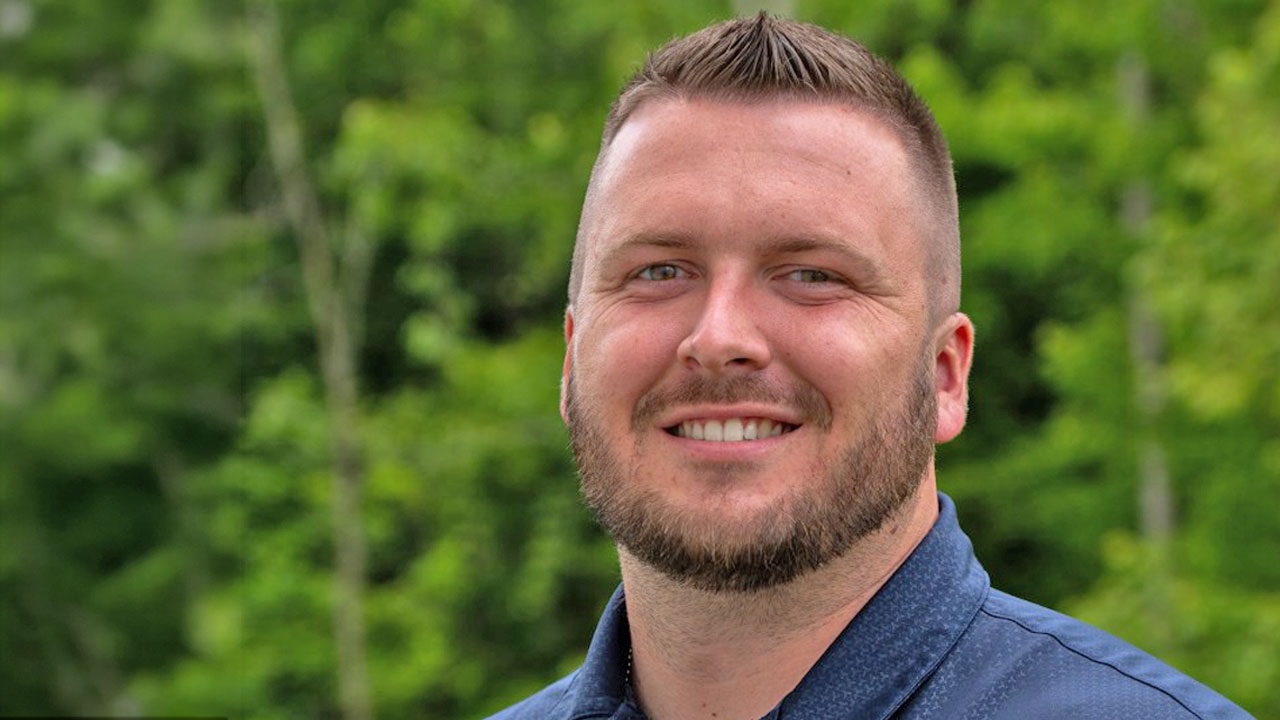
Welcome back to the MSU Research Foundation podcast. Today I’m talking with Bruno Basso of Michigan State University. Bruno is an internationally recognized agricultural systems scientist and a professor in the Department of Earth and Environmental Sciences. He’s also the scientific founder of CIBO Technologies, a company that applies advanced technology to help farmers. I hope you enjoy part two of our conversation.
Did you ever imagine you’d be an entrepreneur in the startup sense, as opposed to an “entrepreneurial professor” building out a research program?
Bruno Basso:
Not really. But one thing that has always characterized me is curiosity. I have this weakness—I always want to learn. I’m a little fanatic about it. I’m always asking, “What happens if we do this?” or “What happens if we change that?”
The real breakthrough was realizing that the technology could scale. Many scientists start with a solution that works beautifully in one place—but then it doesn’t transfer somewhere else. It doesn’t scale. When we connected computing with remote sensing, I realized this could work whether you’re in Michigan or California.
If I wanted to, I had many chances to go work for companies. But my decision was that I wanted to own my own brain. I wanted to think freely—without being guided by whatever product a company needed to sell.
Some ideas become breakthroughs. Others are just lessons that help you do better next time.
Provando e riprovando.
David Washburn:
What does that mean?
Bruno Basso:
“Try and retry.” It’s a phrase attributed to Galileo.
David Washburn:
CIBO is about nine or ten years old now. How big is the team, and what’s your role these days?
Bruno Basso:
We have offices in Cambridge, Massachusetts, Minneapolis, and St. Louis—close to major agriculture companies. The company peaked at just over 100 employees and now sits around 80.
I’m still Chief Scientist. My job is to make sure the science stays strong and defensible—rooted in both lab results and published research. It’s truly a science-based company, and that’s what differentiates CIBO.
And yes, I still do pitches. I’ve pitched to Al Gore—in London and San Francisco. I’ve developed real friendships with many investors, which is important because they want to go back to the source. They want to understand how the company started and what its limitations are.
I talk weekly with the science and programming teams, and I still travel regularly.
David Washburn:
Do they let you write code anymore?
Bruno Basso:
Not at all.
David Washburn:
Not at all?
Bruno Basso:
I was never a talented coder. I was a good thinker.
David Washburn:
You’ve built intelligent systems—both in your lab and at CIBO. Now we’re in the middle of AI mania. How does AI fit into your thinking?
Bruno Basso:
Our models already have intelligence built in. They’re process-based models—meaning they’re grounded in biology and physics. You can look at a single day in a model and trace why something happened.
That’s fundamentally different from a black-box AI system.
What people love today is generative AI—large language models. You type a sentence and you get three pages back. Impressive. But those systems predict based on patterns in data.
AI is still just very sophisticated regression. It predicts within the bounds of the data you feed it. You can’t ask true “what if” questions if the data doesn’t contain that scenario.
Process-based models understand mechanisms. AI does not.
Now, paradoxically, our models can feed AI. We generate daily data. And that’s powerful. Agriculture typically has sparse data—unlike genomics, where data is dense and continuous.
So my stance is this: we stick with science-based models and use AI as a tool—not the driver. Let AI help us improve models, not replace science.
David Washburn:
One thing we care deeply about is keeping companies here—building a real innovation ecosystem in Greater Lansing. From your perspective, what matters most?
Bruno Basso:
Talent density.
When I was traveling weekly to Boston, what struck me was this: if someone left our company, you could look out the window and hire another programmer walking by.
They were literally at the coffee shop.
That’s the ecosystem. It starts with people.
MIT produces huge numbers of engineers. We have great quality here—but not the same volume. So the challenge is numbers, not talent.
The other factor is quality of life. Cost of living helps. You’re not paying $4,000 a month for a shoebox. You can buy a house here.
Young people also care about food, culture, things to do. And honestly, East Lansing has changed a lot. It’s better than when I was a student. New places keep opening. There’s new energy.
For families? It’s a great place to raise kids.
We’re a hidden gem—and we don’t talk about it enough.
David Washburn:
I’ve always thought it came down to talent and capital. Capital is improving. Now it’s about scaling the ecosystem.
Bruno Basso:
We’re on a good trajectory. You can see it. More young people. More companies. More momentum.
David Washburn:
Final question: sustainability. The politics shift, but consumer demand doesn’t seem to. What’s your perspective?
Bruno Basso:
The climate problem hasn’t gone away—no matter who’s in office.
I serve on several boards. Not once have I heard sustainability downgraded in the private sector. Many investors focus only on sustainability.
In the U.S., when government support weakens, the private sector often steps up. I’ve personally seen philanthropists and investors fill those gaps.
Agriculture is both a victim and a contributor to climate change. That’s the complexity.
Farmers see climate variability every day. They’re not skeptical—they’re practical. They want solutions.
Michigan’s work on agricultural resilience is a great example of getting farmers involved directly. That’s where real progress happens.
This work will continue. And we’ll continue to do our part.
David Washburn:
My guest today has been Professor Bruno Basso of Michigan State University—researcher, entrepreneur, and thought leader. Thank you so much for the conversation.
Bruno Basso:
I’m grateful for the chance to share my perspective, and proud to be a Spartan. Thank you.
David Washburn:
Thank you.