
SHARE
February 26, 2026
How a Nurse-Founded Startup Is Redesigning Medical Transportation
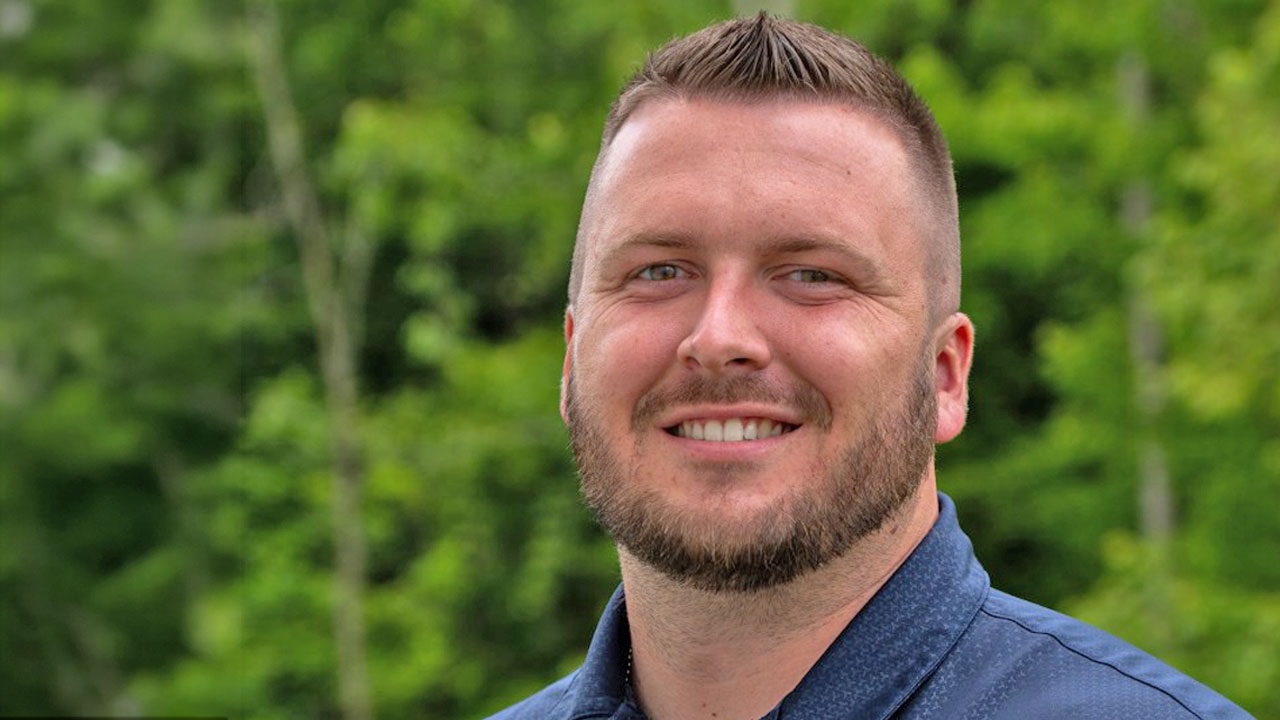
Built on lived experience, Michigan-based Ride YourWay treats transportation as a clinical-adjacent service to improve patient outcomes and hospital flow.
At 4:30 a.m., when most of Grand Rapids is still asleep, a man needed to be at dialysis.
Not occasionally. Not when it was convenient. Every Monday, Wednesday, and Friday—on time, without fail.
For years, no transportation provider would take the job. Some weren’t open that early. Others didn’t want the hassle. And yet, without that ride, his treatment and his health would unravel.
So Tom Sikkema showed up.
At the time, there was no fleet. No dispatch system. No brand. Just a nursing student with a single wheelchair-accessible van and the belief that transportation shouldn’t be the thing that breaks care.
Now, the company that grew from that decision—Ride YourWay—is preparing to test the same patient-first model through a pilot with Henry Ford Health in Detroit, focused on two of healthcare’s most fragile transition points: hospital discharge and emergency department flow.
The Invisible Gap Between Home and Healthcare
In healthcare, transportation is often treated as a vendor transaction—a logistics box to check after the “real work” is done. But for patients, providers, and health systems, it’s frequently the weakest link in the entire care journey.
Missed rides mean missed dialysis. Delayed discharges back up emergency departments. In behavioral health, unreliable transportation increases the risk of relapse, readmission, or worse. For hospitals and skilled nursing facilities, transportation failures introduce liability and regulatory risk, and erode family trust.
“Transportation sits in this strange middle space,” says Sikkema, Founder and CEO of Ride YourWay. “It’s essential to healthcare, but it’s siloed, under-designed, and treated like a commodity.”
The result is a system-level failure hiding in plain sight: hospitals optimize clinical workflows inside their walls, while one of the most fragile moments of care happens just outside them.
A Founder Who Saw the Gaps from Both Sides
Sikkema didn’t arrive at this insight from a business plan or market analysis. He arrived there from a hospital bed.
At 17, he was diagnosed with a rare pediatric brain cancer. During treatment, he experienced firsthand how much of healthcare happens beyond the exam room—and how vulnerable patients become once they leave it.
Later, as a nursing student at Grand Valley State University, he encountered the same issue from the provider side. Transportation appeared regularly as a “social determinant of health,” but the options available rarely matched the stakes.
“The quality just wasn’t there,” he recalls. “Drivers, vehicles, communication—it didn’t align with what patients or facilities actually needed.”
So in his final semester of nursing school, living in his parents’ basement, Sikkema bought a wheelchair van and began scheduling rides through his Apple calendar.
As demand grew beyond a single vehicle, Sikkema plugged into the MSU Research Foundation’s innovation ecosystem in Grand Rapids, becoming one of the first tenants at The Bridge incubator. Through close work with the Foundation’s team and participation in the Conquer Accelerator program, Ride YourWay built the operational, regulatory, and leadership systems needed to scale. The company expanded its fleet, strengthened compliance, and prepared to operate inside complex hospital environments. By 2025, the company had outgrown its space at The Bridge and moved into a dedicated headquarters.
Redefining Transportation as a Clinical-Adjacent Service
From the beginning, Ride YourWay rejected the idea that medical transportation is simply about getting from point A to point B. Instead, the company treats transportation as a clinical-adjacent service—one that requires standards, accountability, data, and human connection built in. That approach shows up in nationally accredited safety and training practices, purpose-built service lines for stretcher-alternative and behavioral health transport, and technology that integrates directly with hospitals and skilled nursing facilities to streamline scheduling and discharge workflows.
Drivers are trained not only to operate specialized vehicles, but to provide hands-on assistance—helping patients navigate doorways, stairs, and entryways the way a family member might.
Ride YourWay is currently the only transportation company in Michigan accredited by the Non-Emergency Medical Transportation Accreditation Commission (NEMTAC), which evaluates safety, operations, compliance, and governance.
“That accreditation signals that patient safety doesn’t stop when someone leaves the building,” Sikkema says.
When Consistency Becomes Care
Back in Grand Rapids, the 4:30 a.m. dialysis patient became something more than a client. Over time, he and his wife became known inside Ride YourWay as the company’s “unofficial grandparents.”
What began as dialysis rides expanded into physical therapy visits, follow-up appointments, and even the occasional Saturday ice-cream outing. Today, Ride YourWay is the sole transportation provider for nearly every skilled nursing facility in the greater Grand Rapids, Muskegon, Kalamazoo, Battle Creek, and Lansing areas, managing hundreds of trips each day.
In another case, a double above-the-knee amputee endured painful rides to dialysis in a standard wheelchair, with every pothole aggravating pressure ulcers. Her Ride YourWay driver noticed the toll it was taking and, on their own initiative, returned to the office to bring back a stretcher-alternative vehicle. The change was immediate. On the ride home, the patient fell asleep—pain-free. And she’s still riding with Ride YourWay years later.
“Our drivers aren’t just drivers,” Sikkema says. “They’re an extension of the care team.”
That consistency is intentional. Ride YourWay employs more than 70 individuals, many serving as Certified Transportation Specialists trained to think like advocates, not just operators—paying attention to changes in mood, comfort, and behavior, then communicating those observations back to care teams.
Why the Henry Ford Pilot Will Matter
As hospitals nationwide face staffing shortages, behavioral health capacity constraints, and discharge bottlenecks, Ride YourWay’s model is arriving at a critical moment.
At hospitals like Henry Ford’s Detroit campus, patients who are ready to go home often face long waits after ride-hailing drivers cancel or staff lack a safe way to assist them into vehicles. In many cases, ambulances are called for medically stable patients simply to avoid those risks—adding cost without improving care.
Through connections facilitated by the MSU Research Foundation, Ride YourWay began working with Henry Ford Innovations in 2024 to identify where these breakdowns were occurring and how a safer, more reliable alternative could improve patient flow.
Working alongside Henry Ford Innovations leaders Vikas Relan and Alexander Reynolds, the team focused on designing a pilot grounded in operational reality, beginning with hospital discharge flow in Detroit.
The pilot centers on two high-friction environments: the emergency department and the hospital’s discharge suite, where patients are medically cleared but still require short-term supervision. Instead of relying on bus passes, ride-hailing apps, or ambulances, Ride YourWay provides scheduled, tracked transportation with trained staff who can physically assist patients from bedside to front door.
“It would be extremely difficult to reach the right decision-makers at a system as large as Henry Ford on my own,” Sikkema says. “That collaboration helped ensure the pilot is addressing real constraints, not theoretical ones.”
If successful, the impact will extend beyond transportation to faster discharges, reduced emergency department congestion, fewer unnecessary ambulance trips, and smoother transitions of care—without compromising dignity.
Designing for the Million Moments That Matter
Ride YourWay has set an ambitious goal: removing one million transportation barriers by 2032. In 2025 alone, the company completed more than 27,000 rides for patients who otherwise may not have had safe, reliable access to care.
But the company is intentionally avoiding hypergrowth. Its focus remains on sustainability—right-sized expansion, disciplined use of data, and investment in people to ensure quality does not erode with scale.
Long term, Sikkema envisions transportation becoming fully integrated into hospital operations, patient experience, and care coordination.
“If we succeed,” he says, “transportation stops being the thing that breaks care. It becomes the thing that supports it.”
For healthcare systems under increasing pressure to improve outcomes without adding beds or staff, that shift may require looking beyond the walls of the hospital—to the ride home.
Ride YourWay is working with health systems to test what happens when transportation is designed as part of care, not an afterthought.
Learn more at rideyourwaymi.com.
Latest Posts

March 17, 2026
March 10, 2026