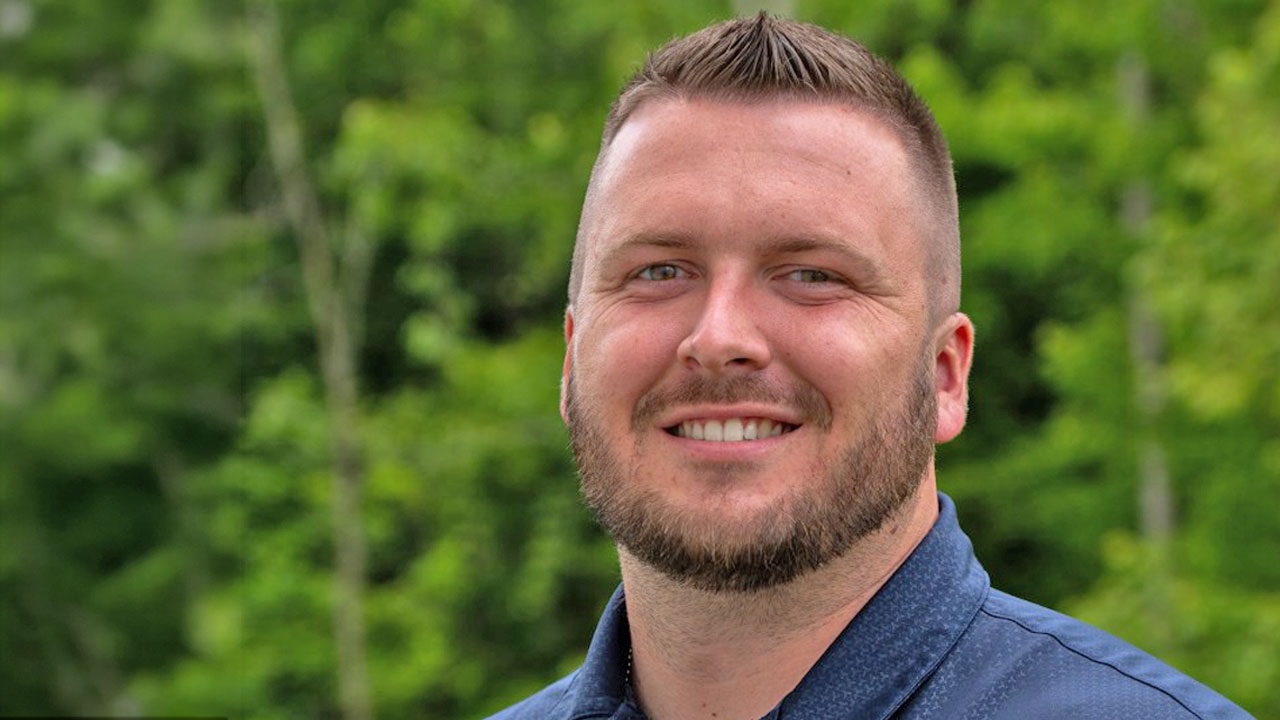
David Washburn:
On today’s episode of the MSU Research Foundation podcast, I’m joined by MSU Provost Dr. Laura Lee McIntyre—and it really was a great conversation. We talked about her background as a scientist, her time at the University of Oregon, and her involvement with Launch Oregon Ventures, which is similar in many ways to what we do here.
It was a wonderful opportunity to explore the depth and breadth of her experience and how that applies to our work at MSU. Dr. McIntyre began her role as provost on August 4, 2025, and as part of that role, she also serves on the board of directors of the MSU Research Foundation—much to our delight. These are my words, but I hope she feels the same way.
Welcome, Provost McIntyre.
Laura Lee McIntyre:
Thank you so much, Dave. And I would say the pleasure is all mine. I’ve really enjoyed serving on the board.
David Washburn:
Awesome. Thank you. So, you’ve been here about six or seven months now. We have to start with the big question: Oregon winters versus Michigan winters. What are your impressions so far?
Laura Lee McIntyre:
Lots more snow. The gray skies are familiar—the Pacific Northwest is cloudy and rainy, and here it’s cloudy and snowy—so I’m just swapping one form of precipitation for another.
But I would say the people in the Midwest more than make up for it. It’s been a warm and welcoming community. If it weren’t for the wind, it would be much more tolerable—but I’ll get used to it.
David Washburn:
You arrived in August, and it’s probably been a whirlwind since then. You’ve been doing listening tours across campus. What have you learned so far? What’s standing out?
Laura Lee McIntyre:
I had an ambitious goal of finishing all my listening tours in the fall. Then I realized there aren’t just 17 colleges—there are about 35 units total—so we’ve extended into the spring.
One of the biggest takeaways is how valuable it’s been to meet faculty, staff, and students and really understand the breadth of expertise on campus. Just this morning, I was in ComArtsSci, learning about their programs and growing enrollment, and talking with folks at WKAR about student internships.
Earlier in the fall, I visited the Honors College and saw how early students get involved in research and how much flexibility they have in shaping their studies.
Every visit has been unique. I’ve been to Grand Rapids, Detroit, all over East Lansing. There’s a shared commitment and real excitement about telling their stories, along with honest conversations about challenges. And those challenges aren’t unique to MSU—higher education is navigating a lot right now.
Coming together as a community and reaffirming our mission as a land-grant institution has been incredibly valuable.
David Washburn:
I recently talked with the president about federal research funding and how uncertain it can feel. He mentioned becoming more entrepreneurial in how we respond. What are your thoughts on that?
Laura Lee McIntyre:
We can’t keep doing things the same way and expect the same outcomes. The landscape is changing.
We have to be nimble—capitalize on innovation, entrepreneurship, and partnerships with industry and nonprofits. We need to bring our collective expertise together.
And fortunately, we have the MSU Research Foundation providing that fuel for our engine.
David Washburn:
Thank you for that—and I promise, that wasn’t scripted.
At Oregon, you were involved with the Ballmer Institute for Children’s Behavioral Health. Can you talk about how that came together?
Laura Lee McIntyre:
I was part of a small team that helped raise a $425 million gift from Connie and Steve Ballmer. Steve, of course, from Microsoft, and Connie is a University of Oregon alum.
They focused their philanthropy on behavioral health, which aligned with faculty strengths at Oregon. That gift allowed us to bring together faculty from multiple colleges and build a new institute in Portland.
We bought a campus and launched an undergraduate program to train bachelor-level behavioral health specialists. That’s unusual—most providers are trained at the master’s or doctoral level.
There’s a major workforce shortage and a youth mental health crisis, so this helped address both.
We also built research infrastructure and community partnerships, and developed a certificate program for in-service teachers—so teachers could learn strategies one night and apply them the next day in their classrooms.
It was multifaceted: undergraduate training, research, community engagement, and professional development. Ultimately, it brought people together around child behavioral health from prevention to treatment. It was wonderful to be part of.
David Washburn:
That’s incredible. It also connects to our work with Strategic Partnership Grants—seeding interdisciplinary work that can grow into larger efforts.
Laura Lee McIntyre:
Exactly. Seed funding is critical, but sustained support matters too—through institutional commitments and sponsored research.
Faculty need time, space, and resources to collaborate. Interdisciplinary work is often what federal agencies find most compelling and what helps solve complex problems.
The Foundation’s investment helps launch people on strong trajectories and can create hubs that grow over time.
David Washburn:
You also arrived while MSU was in the middle of a major capital campaign—and you’d helped land a transformative gift at Oregon.
Laura Lee McIntyre:
I love connecting with alumni and donors. Their commitment to MSU’s future is palpable.
The $4 billion campaign helps us support faculty research and recruit top talent. Endowed professorships are especially important. They help us attract and retain exceptional scholars.
I hold an MSU Research Foundation Distinguished Professorship myself, and those resources matter—even in an administrative role—because research drives our institution forward.
David Washburn:
That program has been important to us for over a decade now.
Laura Lee McIntyre:
It really makes a difference. When you’re at the top of your field, you’ll have options. These resources help us keep great faculty here and engaged.
David Washburn:
At Oregon, you were also the sole faculty member on the board of trustees. That’s a unique perspective.
Laura Lee McIntyre:
It was. Oregon transitioned to an independent board about 13 or 14 years ago. Trustees were governor-appointed, which is different from Michigan’s elected model.
I served two terms as a fiduciary, not as a faculty representative. I brought a scholar’s perspective, but had the same responsibilities as other trustees.
It gave me a deep appreciation for shared governance—faculty, administrators, and boards all play vital roles. Faculty design curriculum and drive research, administrators manage operations, and boards provide oversight.
Serving in that role was incredibly valuable. I joke that it was my career litmus test—I survived.
David Washburn:
Selfishly, I was excited you’d bring that experience here. It’s a valuable lens for our board.
And another thing that stood out was your work with Launch Oregon. Can you talk about that?
Laura Lee McIntyre:
Launch Oregon was housed under the University Foundation and worked closely with the research and tech transfer offices.
As dean of the College of Education, my unit generated significant IP and licensing revenue, which was unusual. We were very entrepreneurial.
We wanted an ecosystem that reflected all disciplines—not just business or engineering. Most faculty focus on research and publication. We wanted to help them see pathways to commercialization.
Launch Oregon provided education, mentorship, and eventually investment. Independent investors supported faculty and postdocs.
It created a pathway from discovery to market. There are a lot of parallels with MSU’s approach—though MSU has been doing this longer and at scale.
It was rewarding to help build that structure, and it’s been valuable here as well.
David Washburn:
That experience really matters. Turning research into products is hard.
Laura Lee McIntyre:
Most faculty only see the tip of the iceberg. There’s so much happening underneath.
Entrepreneurship is learned. It takes motivation and support. But it’s a skill set that benefits everyone—even if you never launch a product.
David Washburn:
You went with the iceberg metaphor, not the duck metaphor.
Laura Lee McIntyre:
Well, I am a Spartan now.
David Washburn:
I love it.
You’re a psychologist, so let me ask: are entrepreneurs born or made?
Laura Lee McIntyre:
It’s a false dichotomy—like nature versus nurture.
Some people may have an innate tendency, but experiences matter. Exposure matters.
Entrepreneurship can absolutely be taught. We have programs, faculty, and staff doing that work. It’s a “both-and.”
David Washburn:
I agree.
Laura Lee McIntyre:
I’d love for all students to learn these skills. We need an entrepreneurial sandbox for everyone—to build, experiment, and demonstrate value.
MSU doesn’t just talk about innovation. We put it into practice.
David Washburn:
This has been fantastic. My guest has been Dr. Laura Lee McIntyre, Provost at Michigan State University, board member of the MSU Research Foundation, and Distinguished Professor. Thank you for being here.
Laura Lee McIntyre:
Thank you. It’s been a pleasure.