David Washburn:
Today’s conversation is with Mike Klein, CEO of Genomenon. Genomenon is a genomics intelligence company that began about 11 years ago based on technology out of the University of Michigan. We’re a co-investor alongside U-M and others in this company, which is doing incredibly important work in the genomics space—helping clinicians diagnose rare diseases, support precision medicine, and ultimately improve patient outcomes. It’s a compelling story, and we’re excited to share it with you.
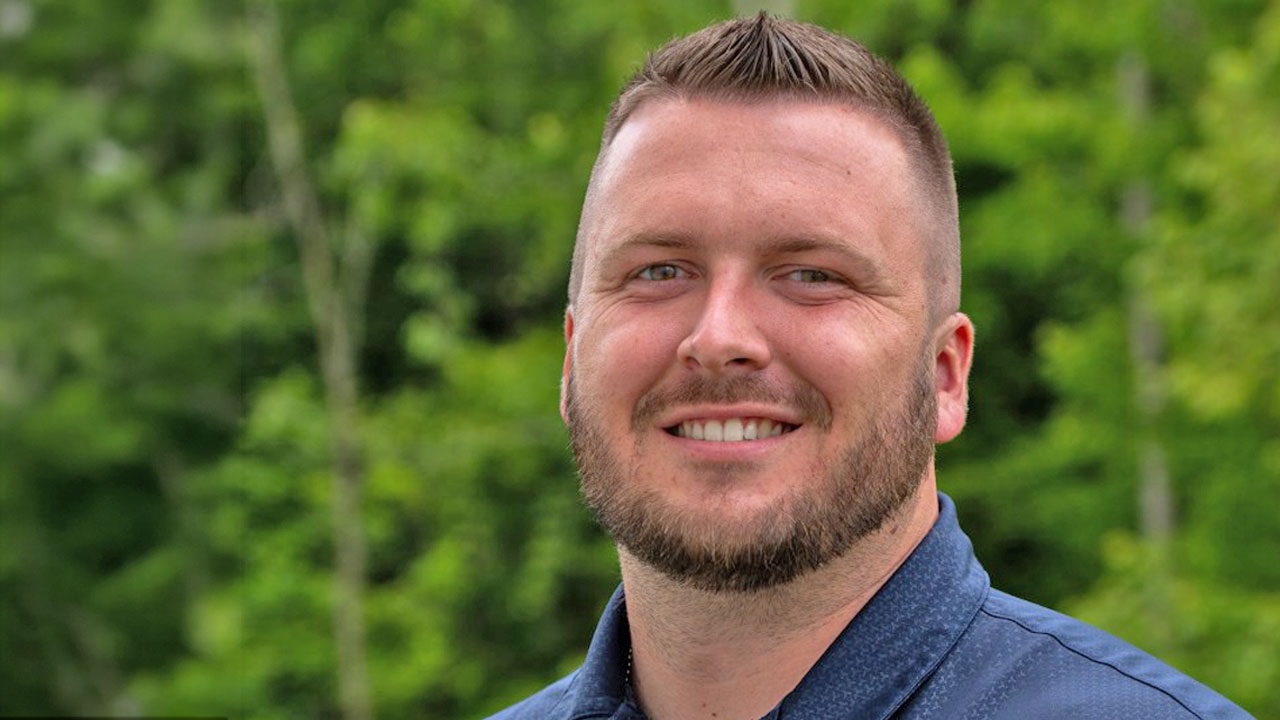
I’m joined today by Mike Klein, CEO of Genomenon. Genomenon is a genomic intelligence company built on intellectual property developed at the University of Michigan. Mike’s going to talk with us about the company’s mission, its products, who uses them, and how the company has evolved alongside the surge in artificial intelligence.
Before we dive in, full disclosure: the MSU Research Foundation, through Red Cedar Ventures and Michigan Rise, is an investor in Genomenon. The company has also been named one of the Best Places to Work by GenomeWeb and has earned numerous awards for its products, industry leadership, and workplace culture. I mention all of that because Mike probably wouldn’t say it himself.
So, welcome, Mike. You’ve had quite a career. Walk us back to your undergrad days—what did you study, and how did you find your way to Genomenon?
Mike Klein:
It’s a long road, Dave, but it started in computer engineering. I earned my bachelor’s degree and went straight into corporate America, working for Motorola Semiconductor. While I was there—living in Arizona—I went to Arizona State at night for my master’s in electrical engineering.
At that point, I thought I wanted to be a researcher, maybe get my PhD and live in the world of computer science. But over time, I drifted toward product development. I eventually joined Rockwell Automation, got deep into building software, and caught the entrepreneurial bug.
Halfway through my MBA at the University of Michigan, I wrote a business plan, quit my job, and started my first company in 1993—Steeplechase Software. We sold it in 2000 to a large French company. After that, I ran two more companies before finding my way to Genomenon.
David Washburn:
So you went from electrical engineering and factory automation to genomics. That’s quite a leap. How did you connect with Mark Kiel at U-M?
Mike Klein:
After my last company—Online Tech—we grew from about $2 million to $20 million in revenue. I wasn’t necessarily looking to jump into another startup. Going from zero to a million is way harder than going from two to twenty.
I joined U-M’s Innovation Partnerships as a mentor-in-residence, helping professors and students spin out new companies. Genomenon wasn’t one of my portfolio companies, but that’s how I met Mark. He had founded the company and was leading it, but he wanted someone to help take it to the next level.
I thought I wanted something more mature. But then I fell in love with the mission.
I could barely spell DNA when I joined—but the idea of using genetics to improve patient outcomes really resonated with me. My mother died of breast cancer 30 years ago. Back then, there was no precision medicine—just one treatment after another. The idea that we can understand the DNA of a tumor and target therapy more precisely… that hooked me.
David Washburn:
That’s powerful. And that really is the mission, right?
Mike Klein:
Yeah—our mission is simple: to make genomic information actionable to save and improve lives.
We work with genetic testing labs diagnosing rare diseases, oncologists making treatment decisions, and pharmaceutical companies developing precision medicines.
David Washburn:
So who exactly uses your platform?
Mike Klein:
We work with about 250 labs and healthcare organizations worldwide—Korea, Australia, Europe, South America, the U.S.—plus about two dozen pharma and biotech companies.
David Washburn:
And your flagship product is Mastermind?
Mike Klein:
Exactly. At heart, we’re a data company. We deliver that data through SaaS platforms like Mastermind and the Cancer Knowledge Base, which we recently acquired. We also license data directly and provide services—think of it as taking the data and “wrapping it with love” so customers can actually use it to make decisions.
David Washburn:
And Mastermind itself grew from U-M research?
Mike Klein:
It did. Mark was a physician-scientist and spent countless hours searching for papers on genetic variants—just Googling, nonstop. Authors describe genes and variants in hundreds of different ways. It’s chaos.
So the original technology—licensed from U-M—was early AI that we call genomic language processing. We use it to normalize all those different terms and scan over 10 million full-text scientific papers. When a clinician searches Mastermind, we don’t just return links—we point them directly to the papers that matter.
David Washburn:
Sounds like you were ahead of the AI wave.
Mike Klein:
We were—and now generative AI is accelerating everything. Instead of just finding articles, we’re helping deliver answers.
David Washburn:
How big is the company today?
Mike Klein:
We have about 150 employees. About 15 are in Michigan. Two years ago, we acquired a company in Bosnia—now we have around 80 skilled genetic scientists there doing curation and client work.
David Washburn:
Can you share a story that shows real-world impact?
Mike Klein:
One of the most powerful stories involves a three-day-old baby who was having a dozen seizures a day. This was at Rady Children’s Hospital in San Diego. They ran rapid genome sequencing but couldn’t find anything in the usual databases.
They entered the data into Mastermind and found one paper linking the baby’s variant to a nutritional deficiency. They changed the baby’s diet—and the seizures stopped.
That boy’s name is Fritz. He’s now a healthy kid in San Diego.
We’re not the doctors. We don’t make treatment decisions. We just make sure the information gets into the hands of the people who do. In that case, it literally saved a life.
David Washburn:
That’s remarkable.
One thing I find especially meaningful is that Genomenon may be the first company backed by both MSU and U-M investment programs. We’re rivals on the field—but when it comes to saving lives, that rivalry fades pretty quickly.
Mike Klein:
Michigan has built an incredible ecosystem. When I started in the 90s, there were maybe three venture capital firms in Ann Arbor. Now there’s a real support structure for early-stage companies.
And you invested in Genomenon back when we were still finding our footing. That kind of support makes all the difference.
David Washburn:
Mike, thanks so much for joining us today.
Mike Klein:
Thank you, Dave. It’s been a pleasure.