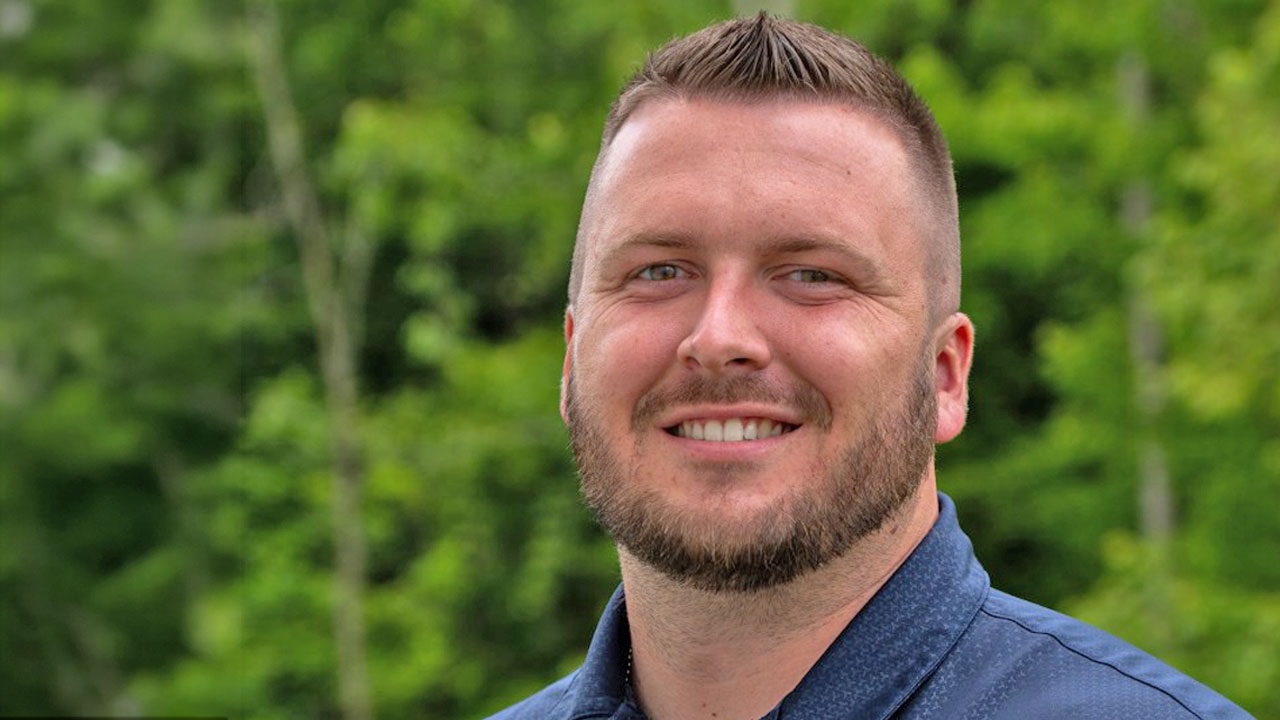
David Washburn
Welcome to the MSU Research Foundation Podcast. Today, I’m joined by Dr. Tom Guarr, founder and CTO of Jolt Energy Storage Technologies. Jolt is developing all-organic compounds for redox flow batteries to make large-scale energy storage more affordable and scalable for renewable energy.
Jolt is based in Holland, Michigan and was founded in 2014. Tom is the company’s founder and CTO—and we had a great conversation. I hope you enjoy it.
Tom, welcome. It’s great to have you here.
Before we get started, full disclosure for our listeners: Jolt Energy is a portfolio company of the MSU Research Foundation, and our venture subsidiary has invested in the company. This is a casual conversation and not legal or investment advice.
With that out of the way—Tom, let’s start with your background. Where are you from? What did you study? And how did you end up commercializing organic chemistry for battery storage?
Dr. Tom Guarr
It’s been a long road. I grew up outside Kansas City and went to a small college in Kansas. Then I headed to the University of Rochester for graduate school, where I focused on inorganic photochemistry and did a bit of work on solar water splitting.
After that, I did a postdoc at Caltech and shifted into electrochemistry. I joined the faculty at the University of Kentucky and was there for about eight years. Then I made one of those strange career decisions—you know, the kind where you leave a tenured faculty job—and joined Gentex here in Michigan.
At the time, Gentex was developing electrochromic rearview mirrors—the kind that automatically dim when headlights hit them at night. Chances are, your car has one.
David Washburn
That’s awesome.
Dr. Tom Guarr
They’re now in nearly half of all domestically produced vehicles—and millions more worldwide.
At Gentex, I finally got to marry my two passions: photochemistry and electrochemistry. One of my last projects there was on the dimmable windows for the Boeing 787 Dreamliner.
David Washburn
Wow.
Dr. Tom Guarr
If you’ve flown in one, you’ve probably played with them. They dim down to almost zero light transmission. There’s an incredible amount of technology packed into those windows.
David Washburn
How long were you at Gentex?
Dr. Tom Guarr
Just over 18 years.
David Washburn
And they’re still thriving.
Dr. Tom Guarr
Over $2 billion in annual sales. A great story.
Then I made another unconventional move—left an executive role at Gentex and went to Michigan State, at the MSU Bioeconomy Institute in Holland. They gave me the freedom to work on whatever I wanted. I started digging again into organic electrochemistry and developed compounds meant to stabilize lithium-ion batteries—to keep them from, as you put it, “blowing up in your pocket.”
David Washburn
Highly desirable.
Dr. Tom Guarr
That’s where Jolt began. The original idea was to commercialize “redox shuttles” for lithium-ion batteries. Technically, it worked. Commercially, not so much.
Software-based battery management systems were getting better and cheaper, and as charge rates increased, our solution became more expensive. So we knew the market was running away from us.
But I realized—we were halfway to an all-organic battery. I had research already underway on the other half, so we put it together and pivoted to organic redox flow batteries around 2017.
David Washburn
And that’s when the grid entered the picture?
Dr. Tom Guarr
Exactly. Flow batteries make more sense at scale. They also let you decouple power from energy, which makes them very scalable.
David Washburn
How does the market look now compared to five years ago?
Dr. Tom Guarr
If anything, it’s stronger. AI, data centers, EVs—global electricity demand is rising fast. Renewables are growing too, but they’re intermittent. Storage becomes essential. The Department of Energy sees that and has funded this space aggressively.
David Washburn
So today—are you building batteries, chemistry, or both?
Dr. Tom Guarr
We’re focused primarily on the chemistry. Utilities need materials that last decades. They have to be stable, inexpensive, safe, and environmentally responsible.
We are building batteries—but small ones, lab-scale systems. We’re scaling now and expect to have a larger demonstration system by the end of the year.
David Washburn
And you’re partnering on the hardware side?
Dr. Tom Guarr
Yes. We’re adapting an existing vanadium flow battery system and swapping in our chemistry. That gives us a fast way to scale and possibly a beachhead market—going back to operators and telling them: “We can double your energy and power density with what you already have.”
David Washburn
Some in the industry argue organics won’t ever work. How do you respond?
Dr. Tom Guarr
I hear that a lot. But organic chemistry is incredibly versatile—you can tune molecules to behave the way you need them to.
People once said organic LEDs would never last. Now your phone and TV are probably OLED. Same story with electrochromic windows—organics now dominate that market.
It can be done.
David Washburn
Tell me about the company today.
Dr. Tom Guarr
We lease labs at the MSU Bioeconomy Institute and recently added a second one. We’re now eight full-time employees—four PhDs, plus technicians and business staff.
We completed a $4.2 million Series A last year. Gentex led the round, and MSU Red Cedar Ventures was also an early supporter. We’re very grateful for that backing.
David Washburn
And how’s Michigan been as a place to build?
Dr. Tom Guarr
It’s been fantastic. Lakeshore Advantage helped us early on—and fun fact: my co-founder and I met on a bus ride to Argonne National Lab on a Lakeshore-sponsored trip.
We’re both from Kansas, both car guys, and we just started talking science. Not long after, we started a company.
David Washburn
That’s a great story.
Dr. Tom Guarr
MEDC’s been supportive too—SBIR funding, intern programs—it’s all helped tremendously. Michigan’s ecosystem has been a positive place to grow.
David Washburn
You’ve worked with Argonne and NREL—tell me about that.
Dr. Tom Guarr
We participated in Argonne’s Chain Reaction Innovations program. It’s incredible. They give you a PI, resources, lab access—no equity taken.
COVID interrupted my in-residence time, but it’s still one of the best programs out there. NREL, Berkeley, Oak Ridge all have similar models now.
We also won Shell’s GameChanger program, which funded work at NREL. That partnership was so strong we continued it with our own funding afterward.
David Washburn
One last topic—sourcing. There’s interest in reducing reliance on scarce or ethically challenging materials.
Dr. Tom Guarr
Absolutely. Lithium-ion uses cobalt—most of it mined under horrible conditions. Vanadium is also scarce and used in steel.
One of my favorite quotes is: If you want something cheap, make it from dirt.
That’s not literally what we’re doing—but close. Organic compounds are everywhere. There’s waste in the petroleum industry we think we can turn into high-value materials.
Right now, some inputs come from overseas. But in the long run, we think an all-domestic supply chain is possible.
David Washburn
You’re targeting a prototype by the end of 2025?
Dr. Tom Guarr
That’s the goal. Science always throws surprises, but we’ll have a real system generating real data—maybe smaller than first planned, but enough to guide what’s next.
David Washburn
My guest today has been Dr. Tom Guarr, founder and CTO of Jolt Energy Storage Technologies in Holland, Michigan. What’s your website?
Dr. Tom Guarr
www.jolt-energy.com — with a dash, not an underscore.
David Washburn
Perfect. Tom, thanks so much for joining us.
Dr. Tom Guarr
My pleasure. Thanks for having me.