David Washburn:
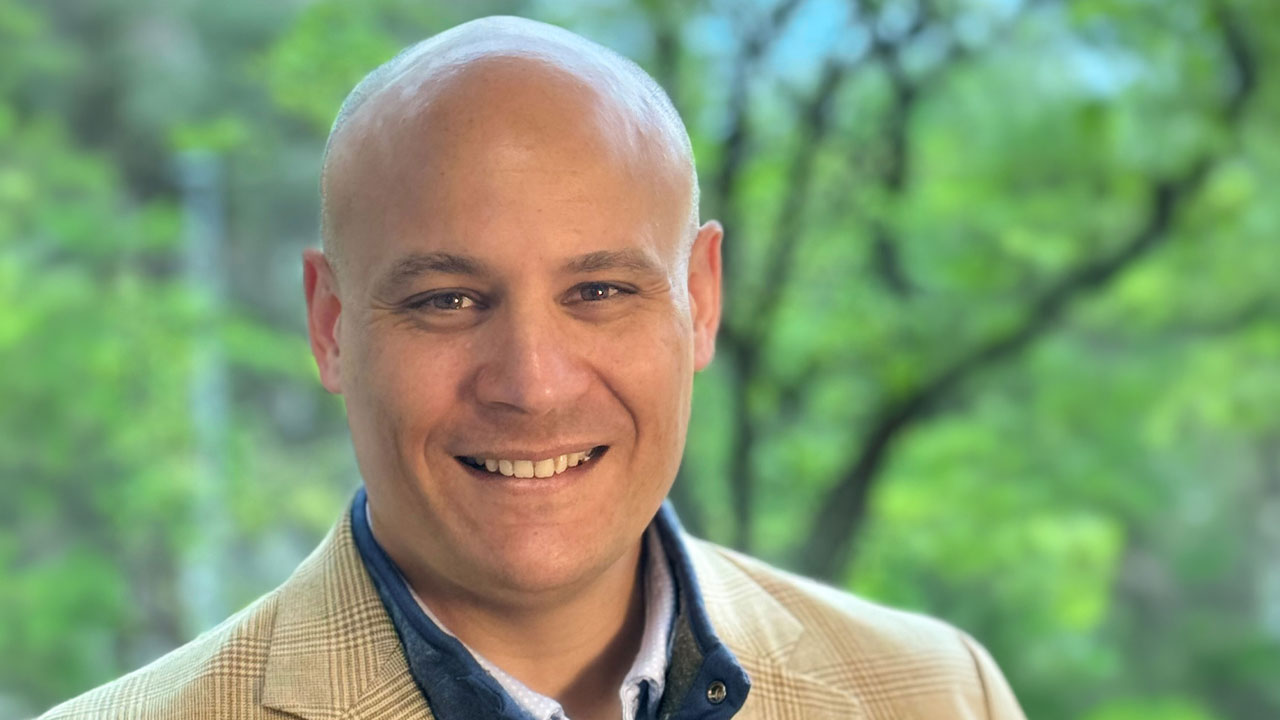
My guest today is Jeff Smith, Executive Director of Research Parks at the MSU Research Foundation and a colleague of mine for many years. We talked about the new Rosenberg Center project, which Jeff and his team are leading. It’s a new facility that we’ll be investing in and building, and it’s going to be an exciting addition for the future. I hope you enjoy this conversation with Jeff.
—
David Washburn:
Welcome back to the MSU Research Foundation Podcast. I’m Dave Washburn, CEO of the MSU Research Foundation.
Today’s guest is Jeff Smith, Executive Director of Research Parks, and we’re here to talk about some exciting news. Jeff, welcome back.
Jeff Smith:
Thanks for having me.
David Washburn:
I think you were our very first guest when we started this podcast about a year ago. Since then, you’ve been busy, and we’ve made an announcement that I thought would be fun to talk about: the Rosenberg Center.
I wanted to walk through some of the headlines—what it is, why we’re doing it, and what it means.
Jeff Smith:
Sounds great.
David Washburn:
You recently wrote an op-ed in the Lansing State Journal about the importance of spaces for entrepreneurship. We often talk about capital, talent, and people, but startup companies also need places to grow. That’s really what the Rosenberg Center is about.
Give us the headline overview.
Jeff Smith:
This project has been several years in the making—really more than a decade if you think about the work we’ve been doing to provide startup space in the region.
We’ve focused primarily on office space, not lab space, and we’ve seen demand continue to grow. This isn’t a typical real estate project. It’s designed specifically for startups, with flexible workspaces, programming, events, and shared amenities built around the needs of entrepreneurial companies.
Over the last 10 years, we’ve filled about 6,800 square feet in the Technology Innovation Center. Now we’re expanding to 68,000 square feet. That’s a tenfold increase and a reflection of how much demand has grown.
David Washburn:
Let’s cover some of the basics. This is a new facility for us. Where is it located?
Jeff Smith:
It’s at 195 Crescent Road on the south end of campus, in what many people still think of as Spartan Village. It’s just beyond the railroad tracks near the Amtrak station.
David Washburn:
And that’s on the east side of Harrison Road, across from the MSU Data Center.
Jeff Smith:
That’s right.
David Washburn:
The Foundation is going to move its headquarters there, along with several of our subsidiary organizations and campus partners. Who else will be in the building?
Jeff Smith:
The Foundation will occupy about 10,000 square feet with our roughly 50 employees.
The MSU Innovation Center, MSU Technologies, and MSU Business Connect will also move in and occupy another 10,000 square feet.
The MSU Data Center doesn’t actually have office space for its staff, so those employees will work from our building as well.
We’re also talking with organizations like Fraunhofer USA about locating there.
David Washburn:
In addition to the Foundation, our subsidiaries—including Spartan Innovations, Red Cedar Ventures, Michigan Rise, and the new Henry Ford Health + MSU Innovation Fund—will operate there as well.
But there’s more to the building than offices. What else will people find inside?
Jeff Smith:
One of the biggest additions is dedicated event space, which is something our region really needs.
We’ll be able to host events for 200 to 300 people, creating opportunities for conferences, startup events, and community gatherings. That space will be built as a two-story addition on the west side of the building, along with informal gathering areas that encourage people to connect.
That’s really what we’re trying to create—an innovation hub where entrepreneurs, researchers, investors, and partners naturally come together.
David Washburn:
The building itself has quite a history. Tell us about its previous lives and how the new addition fits into the project.
Jeff Smith:
The building was originally constructed in the 1970s as the headquarters for MSU Federal Credit Union. It was renovated in the 1990s and again in the 2000s.
After the credit union relocated, IBM occupied the building for several years with its Global Delivery Services operation. When IBM moved out, MSU’s IT Services and Data Center team moved in, and they’ve been there ever since.
So it’s had several different chapters over the decades, and now it’s entering another one.
David Washburn:
One phrase you’ve used that I really like is adaptive reuse.
Originally, we were planning to build something entirely new, but construction costs changed the equation, so we pivoted. Instead of starting from scratch, we’re giving an existing building a new life.
Jeff Smith:
Exactly.
There are already well-built structures that simply need to be refreshed and repurposed. Given today’s construction market, adaptive reuse just makes more sense.
It also allows us to move much faster. Our timeline is aggressive, with the first phase opening in late 2026 and full completion in spring 2027. There’s no way we could have moved that quickly with an entirely new building.
David Washburn:
The old credit union had drive-through banking lanes. Remember when you’d send your deposit through the pneumatic tubes? Those drive-through bays are coming off, and that’s where the addition is going, right?
Jeff Smith:
That’s right. We’re planning an 8,000-square-foot, two-story addition on the west side of the building, built using mass timber.
We’re receiving a Mass Timber Enabling Grant, which will help make the project a demonstration site for mass timber construction. Michigan State is a global leader in that field, so it’s a great opportunity to showcase the technology.
Removing the drive-throughs allows us to extend into the parking lot while creating a much more welcoming entrance and reducing the building’s overall carbon footprint.
David Washburn:
Will there also be space where partners can drop in for the day—grab a coffee, take meetings, get some work done, and then head out? Is that part of what you’re envisioning?
Jeff Smith:
Absolutely. In fact, we’re counting on it.
We want this to become a home base for people across the innovation ecosystem—startup founders, investors, entrepreneurial support organizations, regional partners, and others. We want people to stop in, work for a few hours, grab a coffee, and, most importantly, run into one another.
That’s where innovation really happens.
David Washburn:
You’ve talked a lot about those collisions—people unexpectedly crossing paths instead of only interacting through Zoom. The renderings really capture that vision.
Will there also be dedicated startup offices alongside those shared spaces?
Jeff Smith:
Yes, and that’s very intentional.
Over the years we’ve refined what startup space should look like. A one- or two-person company doesn’t need much, but having a professional office, a mailing address, and direct connections to the university can make a huge difference.
Students can work alongside those companies through internships, founders can collaborate with one another, and companies have room to grow.
We’ll have flexible drop-in workspace, but we’ll also have private offices that companies can lease.
David Washburn:
We’ve also been very deliberate about how the Rosenberg Center fits into the Foundation’s broader portfolio of innovation spaces—from the VanCamp Incubator to the Alliance Building and beyond.
How does this project fit into that larger strategy?
Jeff Smith:
We try to build space where research and innovation are happening.
The highest concentration is here in Greater Lansing because that’s where so much of Michigan State’s research takes place. Our presence in Grand Rapids and Detroit reflects the level of research and innovation activity in those regions as well.
What we’ve found in Lansing is that we’re still playing catch-up compared to many of our national and international peers. As research activity continues to grow, the infrastructure that supports commercialization needs to grow with it.
The Rosenberg Center is part of that larger vision.
And there’s room for even more. The area surrounding the building has the potential to evolve into a true innovation district, with TechSmith serving as one anchor and the Rosenberg Center another. There’s an opportunity to create something much larger between those two points.
David Washburn:
That also fits nicely with the university’s renewed emphasis on corporate engagement—connecting faculty, students, employers, and industry partners in new ways.
This feels like an important piece of that broader strategy.
Jeff Smith:
I hope the university increasingly sees this as a resource.
The Foundation’s mission is to help drive economic development, but we’re also creating infrastructure the university can use. We already have Michigan State research taking place in some of our facilities, and in many cases that work might not have happened otherwise.
What we’re really creating is a third space—a place that sits between campus and industry, giving researchers, entrepreneurs, and companies a more flexible environment where innovation can happen.
David Washburn:
Who was Barnett Rosenberg?
Jeff Smith:
Dr. Barnett Rosenberg was a Michigan State scientist whose research led to the discovery of cisplatin and later carboplatin—breakthrough cancer therapies that ultimately helped establish the Research Foundation.
We really wouldn’t be the organization we are today without that discovery.
Loretta VanCamp was a co-principal investigator on that research, which is why we named the VanCamp Incubator in her honor. Naming the Rosenberg Center after Barnett Rosenberg is another way to recognize the people whose work laid the foundation for everything we do today.
David Washburn:
It’s a fitting tribute.
Tell us about the timeline.
Jeff Smith:
As we’re recording this at the end of June 2026, you’ll start to see fencing go up and construction begin in mid-July.
By July and August, we’ll be moving dirt and making visible progress on the site.
Our goal is to welcome the first tenants in October or November of this year, with the full project completed by the end of spring 2027.
It’s an aggressive schedule, but that’s one of the advantages of working with an existing building instead of starting from the ground up.
David Washburn:
It’s an exciting project.
The Rosenberg Center is a new 68,000-square-foot facility near the former Spartan Village site. It will serve as the headquarters of the MSU Research Foundation, house many of our partners, and create a place where entrepreneurs, researchers, investors, and corporate partners can come together.
It’s designed to be a flexible, modern workplace that supports innovation, and we’re incredibly excited about what it represents.
Jeff, congratulations. I know there’s still a lot of work ahead, but this is a tremendous milestone.
If you’re interested in learning more, visit our website. We’d love to show you the project and keep you updated as construction moves forward.
Jeff Smith:
Absolutely. It’s an incredible opportunity—not just for the Research Foundation, but for the university and the broader innovation community. I’m honored to be part of it.
David Washburn:
My guest today has been Jeff Smith, Executive Director of Research Parks at the MSU Research Foundation and the person leading the Rosenberg Center project.
Jeff, congratulations, and thanks for joining us.
Jeff Smith:
Thank you. I appreciate you having me.