David Washburn:
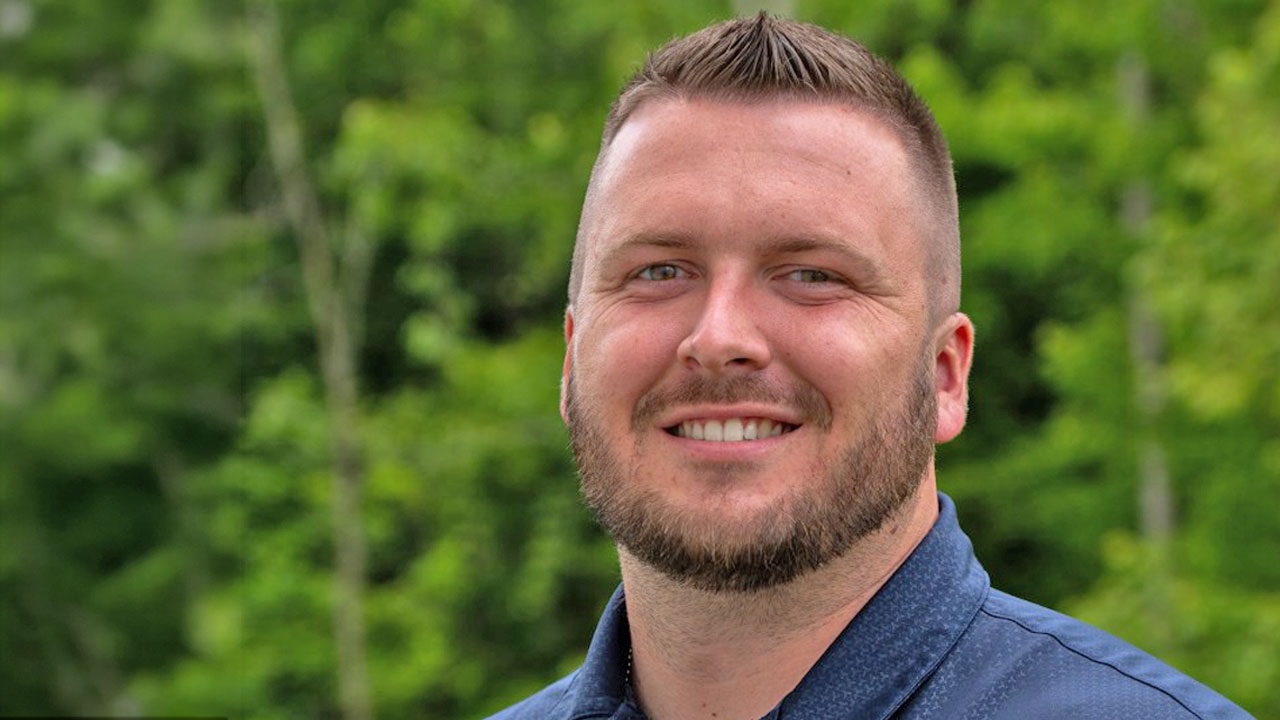
My guest today is Peter Falzon, president and CEO of Ripple Science—a Michigan company that’s built a clinical trials management platform focused on recruiting and engaging research participants.
Before we begin, a quick reminder that this is a fun and informative conversation, not investment or legal advice. And full transparency: Ripple Science is a portfolio company of the MSU Research Foundation. Both Red Cedar Ventures and the Michigan Rise Pre-Seed Fund have invested in the company.
Peter, welcome.
Peter Falzon:
Thanks—great to be here.
David Washburn:
Let’s start from the beginning. Where are you from, where did you study, and how did you end up as CEO of Ripple?
Peter Falzon:
I’m a Michigan native—grew up around Detroit. I went to the University of Michigan for undergrad, where I studied economics and Japanese, and then I spent about ten years living and working in Japan.
I started in the auto industry at Toyota, working in finance at their headquarters in Toyota City. I was part of teams that were building factories overseas—so I’d bounce between Michigan, Kentucky, and Ontario, wherever the investments were happening.
Along the way, I met someone from a Palo Alto-based medical device company. They were building laser devices for eye surgery and needed help expanding in Japan. That’s how I ended up in the medical device startup world. They hired me to open the Tokyo office.
That company grew fast—really fast. I was 28, and we went from one office to 55 employees, five locations, and a $40 million business in about four years. It was a rocket ship.
The company was based in Silicon Valley, so I started spending more time there. Eventually, the company was acquired, and after that I joined another group of engineers to start a second company making dermatology lasers. That company went public in 2004.
After that, I shifted into mentoring and advising startups—mostly in medical devices and diagnostics—and that’s what eventually brought me back to Michigan.
David Washburn:
You’re kind of the prototype of the entrepreneur-in-residence: international career, startup experience, IPO… then rediscovering Michigan.
Peter Falzon:
Yeah, the “homecoming” movement really hit me. Dan Gilbert and the work around Invest Detroit created real momentum. I was still in Silicon Valley when I started hearing about it, but it made me realize—we don’t just have to chase opportunity elsewhere. We can build it here.
So I bought a loft in Detroit and got active again locally. I worked at both Wayne State and the University of Michigan as a mentor-in-residence—and that’s how I met Nestor Lopez-Duran.
David Washburn:
So Ripple started as a research project?
Peter Falzon:
Exactly. Nestor is a psychologist and researcher. His work focused on childhood and adolescent depression, and his lab was funded by NIH grants. But recruitment was a real challenge. If you can’t recruit and retain participants, your research—and your funding—are at risk.
So like many founders, he just rolled up his sleeves and tried to solve the problem. He looked at all the tools they were using—Excel spreadsheets, SurveyMonkey, even Salesforce at one point—and said, “This doesn’t work.”
He ended up writing a grant to build an integrated platform that could manage recruitment, screening, enrollment, scheduling, and communication—but do it securely, with privacy and compliance built in from the beginning.
With grant funding, he built the first version of Ripple. And it worked. He went from struggling with recruitment to becoming the poster child for clinical trial execution at U-M. Other departments started using it. Then medical school researchers. Then Michigan State University through joint grants. Then other universities.
Eventually, the question became: “How do we make this available to researchers worldwide?” And the answer was: you spin up a company.
That’s when I got involved.
David Washburn:
So can clinical trials fail just because they’re poorly managed?
Peter Falzon:
Absolutely. The data is eye-opening. About $78 billion a year is spent on early-stage drug development. And 92% of clinical trials fail. The number one reason? Insufficient recruitment. Number two? Participants drop out.
So Ripple focuses on making that part of the process predictable, manageable, and transparent. I sometimes describe it as the “last mile” of clinical research—from the research team to the participant sitting at home.
And that last mile looks very different depending on where you are. A clinic in downtown Ann Arbor and one in Michigan’s Upper Peninsula face totally different challenges.
So Ripple isn’t rigid. Each site configures its own workflow—but all the data rolls up into one system. You don’t bend your operations to the software. The software bends to your reality.
David Washburn:
You were doing AI before everyone started calling it AI.
Peter Falzon:
We were calling it machine learning back then.
We built an algorithm that predicts dropout risk and still gets downloaded years later. We analyzed thousands of trials and found the average patient who drops out does so around touchpoint number 11. But we can predict risk by touchpoint number four with about 94% accuracy.
That’s based on things like missed calls, rescheduled appointments, note patterns—little signals that matter.
And to be clear: the goal isn’t to remove patients from trials. It’s the opposite. If we know who’s at risk, we put more resources around them. You can’t give that level of attention to everyone—but you can give it where it matters most.
David Washburn:
There’s a lot of uncertainty around federal research funding right now. How does that affect Ripple?
Peter Falzon:
These are stressful times. Funding uncertainty affects both early research and clinical trials.
But it also makes our platform more important. If teams have fewer resources, they need better systems. Automation, workflow, communication, reporting—Ripple helps people do more with less.
We have multicenter studies across Michigan—MSU, U-M, Wayne State, and dozens of clinics statewide—all reporting through one platform. If that were done by spreadsheets alone, it would be chaos.
David Washburn:
Tell me about the company today.
Peter Falzon:
We’re a Michigan company, without question. The technology was developed here. The founder lives here. I live here—even though I still spend time in California.
We have about 13 people total. Leadership and the board are mostly Michigan-based. We went remote during COVID and never really went back—and honestly, we became more productive.
Funding-wise, Michigan’s ecosystem has been incredible. Both MSU and U-M are significant investors. That surprised me, coming from Silicon Valley. You don’t see that kind of university engagement there.
The universities have been tough but fair investors—and great partners.
We also have support from Invest Detroit Ventures, Rise of the Rest, Mercury—but the Michigan story really stands out.
David Washburn:
This is such a great example of what happens when Michigan institutions work together. MSU and U-M may compete—but we also collaborate. And this company is proof that ecosystem investing works.
Peter, thanks for sharing the story and for building Ripple here in Michigan.
Peter:
Thanks, Dave. I really appreciate the support.