David Washburn:
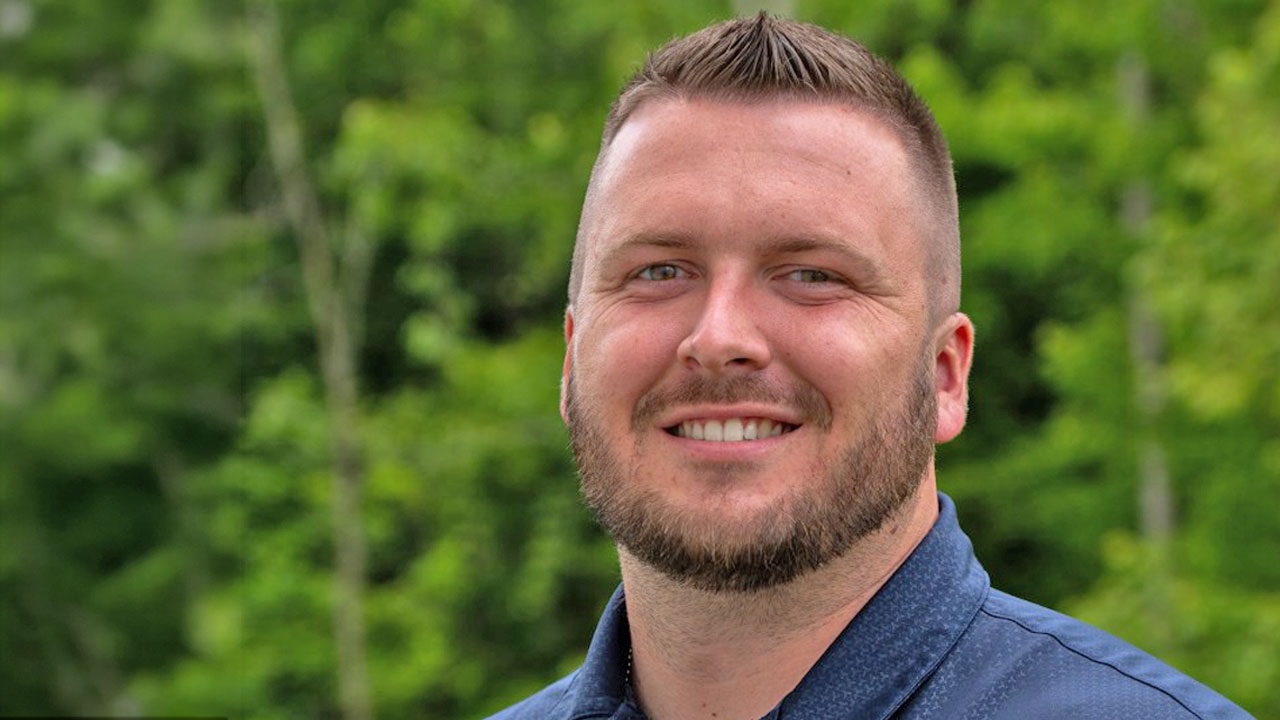
Welcome to the MSU Research Foundation Podcast. Today, I’m talking with Bruno Basso of Michigan State University. Bruno is an internationally recognized agricultural systems scientist, a professor in the Department of Earth and Environmental Sciences, and the scientific founder of CIBO Technologies—a company applying advanced science to help farmers. I hope you enjoy part one of our conversation.
Today I’m talking with Professor Bruno Basso at Michigan State University. He is a former MSU Foundation Professor and has since been named to the university’s most prestigious appointment—the John Hannah Professorship. Congratulations, and welcome, Bruno.
Bruno Basso:
Thank you, Dave. I appreciate it. And thanks for having me.
David Washburn:
Your research on spatial and temporal variability in crops, yield, water, and nutrients has led to some fascinating work. You’re also an entrepreneur and founder of a company that’s applying this research in the real world.
Just a quick disclosure: the MSU Research Foundation and our venture fund, Red Cedar Ventures, are investors in your company. And as always, this podcast is not legal or investment advice.
Your accent is definitely not from Michigan—so let’s start there. Where are you from, and how did you end up at Michigan State?
Bruno Basso:
I’m Italian-American with dual citizenship. I was born in Naples—an incredible city that just celebrated 2,500 years of civilization. Many people know it because of the Amalfi Coast and Positano—pretty close to paradise.
I studied agriculture and biological systems engineering at the University of Naples. But interestingly, I’ve had a long connection with MSU that goes way back. The first time I came here, I was just 17.
David Washburn:
Seventeen?
Bruno Basso:
Yes. I played high-level soccer in Italy, but I got injured. My father—who was also a professor and scientist—knew Joe Ritchie here at MSU, a very well-known researcher. This was 1988, so the connection happened through letters. My dad wrote to Joe asking if his kid could come work in the fields and learn agriculture during my final year of high school.
I came back every summer after that. Eventually, I worked for Joe as a technician for four years before starting my PhD. I traveled the world with him.
David Washburn:
Wow.
Bruno Basso:
And the rest is history.
David Washburn:
Joe Ritchie was a pioneer in crop modeling, especially at a time when computing power was just starting to expand. Desktop computers, software, modeling tools—they were all taking off.
Bruno Basso:
The very first model he built to simulate water flow through plants was done using punch cards.
David Washburn:
No way.
Bruno Basso:
Yes. Later, as computers evolved, we could model photosynthesis, water, nutrients—everything in the plant–atmosphere system.
Joe originally worked at the USDA, and he’s considered the father of crop simulation models. Some of the earliest funding actually came from the USDA’s Foreign Agricultural Service during the Cold War. They wanted to predict wheat production in the Soviet Union.
So there was a national strategic element to it—and much of that work was classified.
David Washburn:
That’s incredible.
Bruno Basso:
The original model was called CERES—named after the Roman goddess of fertility. Later, we developed a more advanced model called SALUS, which means “health.” It stands for System Approach to Land Use and Sustainability.
This model doesn’t just predict yield. It tracks sustainability, greenhouse gas emissions, water use, and environmental impact. It’s especially relevant here in Michigan, surrounded by water. The goal has always been productivity—but with minimal environmental impact.
David Washburn:
You also had to learn to code along the way, right?
Bruno Basso:
Absolutely. Back then, we had fewer programmers. Today, I have about 15 in my lab—which feels like a luxury.
Early on, I spent a lot of time processing satellite images and building models. My work became one of the first efforts to really integrate space and time in agriculture.
A model simulates one square meter of field—but fields aren’t uniform. Soil changes. Topography changes. Climate changes. Even within one field, conditions vary. So the real challenge was making models reflect reality.
That’s when we started connecting imagery and models to capture how crops actually behave across landscapes.
David Washburn:
And you were one of the first to use drones in agriculture.
Bruno Basso:
About 15 years ago, someone called me and said, “You’re on the front page of the Lansing State Journal.”
The headline was: MSU Lends First Drone.
That was me.
A drone translates what plants are telling us through light. Healthier plants are darker green. Nutrient-stressed plants look lighter. We don’t see colors—we analyze reflectance data.
If crops start turning orange in July, something is wrong. Maybe disease. Maybe drought. Maybe nutrients. Sensors detect stress at the pigment level. They tell us what plants are experiencing underground.
Then we scale that from drones to satellites—and build models that say: What if we tried something different?
It’s essentially a digital twin of the field.
David Washburn:
How big is your lab today?
Bruno Basso:
We’re over 30 people. And growing.
I compete with the private sector for talent. My team includes physicists, mathematicians, geophysicists, agronomists, and coders. Plus PhD students out in the field collecting data.
It’s more of a family than a lab.
David Washburn:
You’ve also turned your research into a company. Tell me about CIBO.
Bruno Basso:
Writing a grant proposal is no different than pitching a startup. You’re saying: Here’s a problem—and here’s how I’ll solve it.
The key is always: What problem are you solving? And how will you measure success?
CIBO was founded with Flagship Pioneering—the same firm behind Moderna. A little bit of luck played a role. But also timing, trust, and showing real value in the field.
“CIBO” means food in Italian.
David Washburn:
That’s perfect.
Bruno Basso:
After a profile on PBS NewsHour, investors started calling. That’s when things accelerated.
What makes CIBO unique is scale. We don’t sell to farmers directly. We work B2B—food companies, seed companies, investment funds.
We quantify environmental impact: carbon sequestration, emissions reduction, nitrate runoff. This is how companies report Scope 3 emissions from their supply chains.
David Washburn:
Who are some of your partners?
Bruno Basso:
Nestlé, Land O’Lakes, banks, seed companies, pharmaceutical companies. Many large food and land-investment groups.
David Washburn:
And the platform gives customers data dashboards?
Bruno Basso:
Yes. But more than data—it tells you what changed and why.
We use computer vision to detect regenerative practices like cover crops and no-till. But the model goes further. It calculates carbon and environmental impact by location and crop type.
Those numbers are verified and registry-approved. Companies can say: “This wheat reduced emissions by X tons of CO₂.”
That matters now—to shareholders, regulators, and consumers.
David Washburn:
Sustainability used to be a buzzword.
Bruno Basso:
Now it’s embedded in everything. People want to know where their food comes from, how it’s grown, and what impact it has.
My goal is simple: make sustainable food affordable for everyone—not just those shopping at Whole Foods.
And in Michigan, clean water matters. Fertilizer runoff, nitrate pollution—these are real issues. Agriculture is a leaky system. But we can manage it better if we predict need instead of guessing.
You only eat when you’re hungry. Farming should work the same way.
That’s what the Basso Lab and CIBO are trying to do: produce food better, protect the planet, and improve life.
David Washburn:
My guest has been Professor Bruno Basso—researcher, professor, and entrepreneur. Thank you for your time, your work, and this great conversation.