Dave Washburn (0:08)
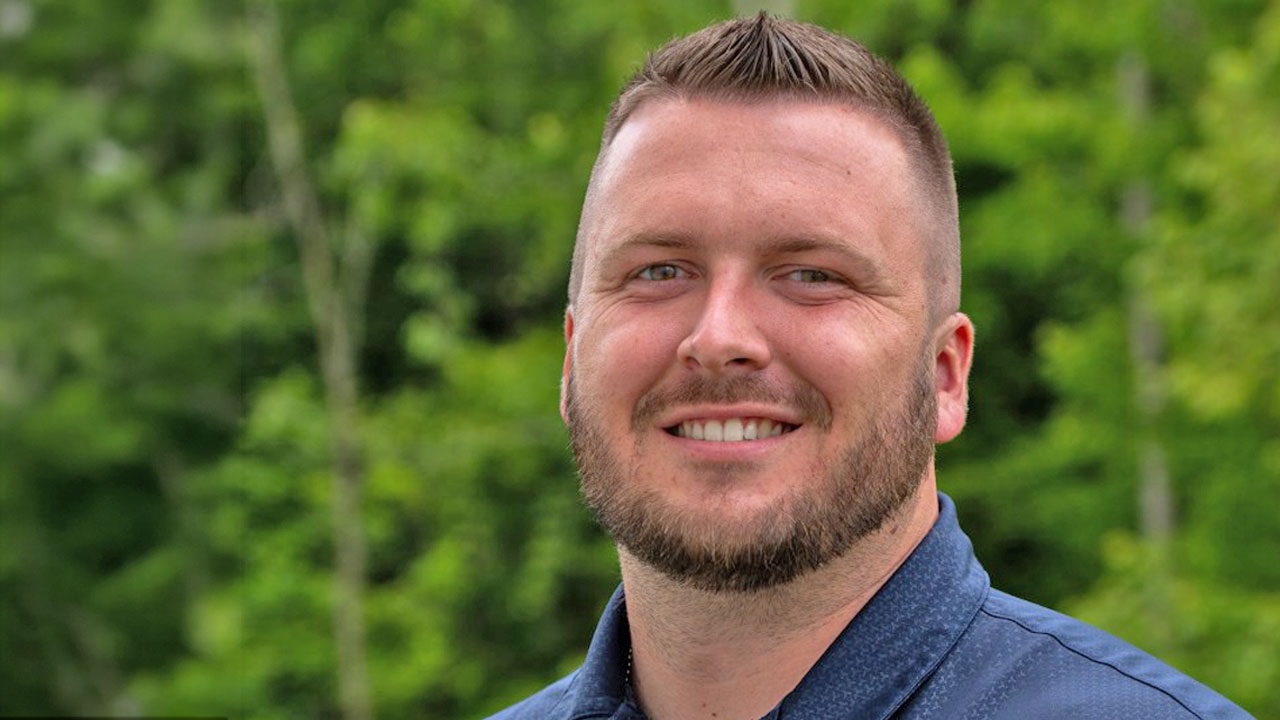
In this episode, I’m joined by Jon Barada, Vice President of IU Ventures. Jon’s a great colleague from another Big Ten university doing work very similar to ours—early-stage venture investing and tech commercialization. I think you’ll really enjoy this conversation.
Welcome to the MSU Research Foundation podcast. Today’s episode is a little different—and I’m excited about it. I’m joined by Jon Barada, Vice President of IU Ventures. Yes, that IU—Indiana University—our Big Ten friends just down the road in Bloomington.
People often tell us, “What you’re doing at Michigan State is great… but is it unique?” The short answer is no. A lot of universities are doing this work, and we’re all in constant conversation, comparing notes. Jon is one of the great conveners in the Big Ten ecosystem. A few years ago, he took the initiative to bring together the people across universities who are focused on commercialization and venture investing.
So today, I invited him to talk about what they’re building at IU. Jon, welcome.
Jon Barada (1:58)
Thanks, Dave. When you first invited me, I thought we were going to talk about IU football—specifically our win in East Lansing last fall. Which I believe was our first win there in about… fifty years. So if you want to pivot, I’m ready.
Dave Washburn (2:16)
I checked my outline. IU football did not make the cut. But it was a great year, and IU is a great place. Like all of our Big Ten communities, it’s special. I’ve got a soft spot for Bloomington—friends who went there, friends who teach there. And you did an incredible job pulling this group together.
Before we get into venture capital and IU Ventures, let’s start with your background. Where are you from? How did you end up here?
Jon Barada (3:09)
First off—go green, go white. I’ve got a nephew who just graduated from Michigan State, so the love goes both ways.
I’m an Indiana kid, from a small town called Rushville, down toward the Ohio River. Fun fact: it’s named after Benjamin Rush, one of the signers of the Declaration of Independence, and it was home to 1940 presidential candidate Wendell Willkie. That’s basically your full history of Rushville in two sentences.
My parents met at IU on a trip to the 1968 Rose Bowl—Indiana’s only Rose Bowl appearance, by the way. Two older brothers went to IU. So yeah, Hoosier through and through. I had a signed picture of Bob Knight in my childhood bedroom and used to secretly listen to late-night games on my Walkman when my parents made me go to bed.
Career-wise, I’ve spent most of my professional life in higher education and healthcare—fundraising, alumni relations, development work for the Kelley School of Business, IU School of Medicine, and eventually leading the Bloomington Hospital Foundation. When I started, we had about a $35 million endowment. We raised money for a hospice house, NICU improvements, cardiac care—a lot of community-focused projects.
That led to a conversation with our CEO, Tony Armstrong, who asked, “Want to come help us build something new at IU Ventures?” The skill set translated surprisingly well—community building, relationships, collections of capital. That was nearly five years ago now, and it’s been a blast.
Dave Washburn (6:23)
What really strikes me is how much universities in the Midwest have had to step up and play an active role in venture investing. A colleague of mine came back from Silicon Valley to Michigan and was shocked at how involved MSU and U-M were—mentorship, capital, commercialization support. In the Valley, he said, universities don’t need to do that. But in the Midwest, we don’t have venture capitalists roaming Bloomington and East Lansing in large numbers.
That brings me to the IU Founders and Funders Network. Can you lay out how that works?
Jon Barada (7:57)
Our guiding question at IU Ventures is simple: How can we increase the number of IU-affiliated startup success stories?
There are lots of reasons to care about that—economic development, tech transfer, student recruitment, access to opportunity. But fundamentally, if we can be one-tenth of one percent of extra wind in the sails for founders, we’re doing our job.
The first step was capital. We launched the IU Philanthropic Venture Fund—an evergreen nonprofit fund that invests in IU-affiliated startups. “IU-affiliated” means alumni, faculty, staff, or students. Or companies commercializing IU intellectual property.
Then we built the IU Angel Network—about 100 alumni and affiliated investors. Since 2020, they’ve deployed about $9 million. It’s not a fund; it’s a platform. We collect membership fees, but we don’t take carry. The point is alignment and access.
And that led to the third piece: the Founders and Funders Network.
There are nearly 800,000 living IU alumni. And inside that number is a world-class ecosystem: founders, investors, attorneys, accountants, customers, executives, mentors—you name it. Our insight was that this community already exists… it just wasn’t connected.
So we started stitching it together—not by school or discipline, but by vocation and industry. If you’re building startups or investing in them, this is your affinity group. The network becomes the product.
It’s mentoring. It’s investing. It’s hiring. It’s referrals. And we’ve treated it like a brand—The Network—something you belong to and add value to.
That’s been the journey.
Dave Washburn (13:52)
What you’ve done without stepping on Advancement’s toes is impressive. Universities get territorial about alumni engagement. How did you navigate that?
Jon Barada (14:50)
We went straight to the investors and asked the question: “Does this compete with your charitable giving?”
The answer was consistently no.
People naturally separate their money into buckets: Living expenses, investments, and giving. Angel investing lives in the “investments” bucket. Philanthropy is a different mindset. We’ve never seen one cannibalize the other. Time will tell if the positive correlation shows up—but we’re confident we’re growing the pie, not slicing it thinner.
Dave Washburn (17:15)
How does deal flow work across all three platforms?
Jon Barada (17:40)
The Philanthropic Venture Fund is our house fund—average check size around $250K. Most life sciences and faculty-driven deals go through that.
The Angel Network typically invests around $25K per check, and if enough angels invest at scale, that triggers co-investment from the house fund.
Deal flow started as a grind—LinkedIn messages, coffees, referrals. Alumni data doesn’t tell you who’s building startups. So we built our own list one relationship at a time.
Now we get 30–40 inbound requests a month.
We host events in cities like New York, San Francisco, and LA. It builds community—but it’s also a data strategy. Today, we’ve connected with about 2,500 alumni who self-identify as founders, funders, or operators. It’s an affinity group we had to invent.
And somewhere along the way, someone commented on LinkedIn: “Today I learned my university has a venture capital arm.” That was our “we’re getting somewhere” moment.
Dave Washburn (23:12)
Are you active across the state?
Jon Barada (23:47)
Absolutely. Bloomington is our base. Indianapolis is exploding with innovation under President Whitten’s leadership. The School of Medicine is massive—one of the largest in the country. And initiatives like IU LAB are building real momentum with industry partners like Eli Lilly and IU Health.
Regional campuses are next—and entrepreneurship looks different everywhere. Maybe it’s venture-scale software in Bloomington… or a $20M HVAC company in Kokomo. Both count.
Dave Washburn (26:29)
You’ve also convened the Big Ten Venture Network. That didn’t exist before you… so how did that happen?
Jon Barada (27:17)
Honestly? I didn’t know what I was doing. I was coming out of healthcare philanthropy. I had watched Shark Tank. That was my VC credential. So I just started emailing people. Googling job titles. Asking if anyone wanted to talk. And people said yes. We started sharing mistakes. Templates. War stories. Someone would say, “Don’t do this.” Another would say, “We tried that. Here’s what worked.” We rounded up some sponsors—Bridge Bank, Corales & Brady—and picked a date. The rest was out of our hands. This fall will be our fourth Big Ten Venture Network Summit. We’ve even started conversations with the National Venture Capital Association. Maybe one day there’s a Big Ten Venture Fund. Or a media partnership. Or an innovation showcase. But today? It’s good people, good beer, smart conversations, and fewer mistakes because we’re learning together. That’s a win.
Dave Washburn (31:28)
That’s impact. Helping smart ideas leave the lab and enter the real world. Creating jobs. Growing communities.
Jon, thank you for what you’re building—and for bringing us all together.
My guest today has been Jon Barada, Vice President of IU Ventures. Check out their work—it’s impressive. And Jon, thanks again for sharing your story.
Jon Barada (33:21)
Thanks, Dave.