David Washburn:
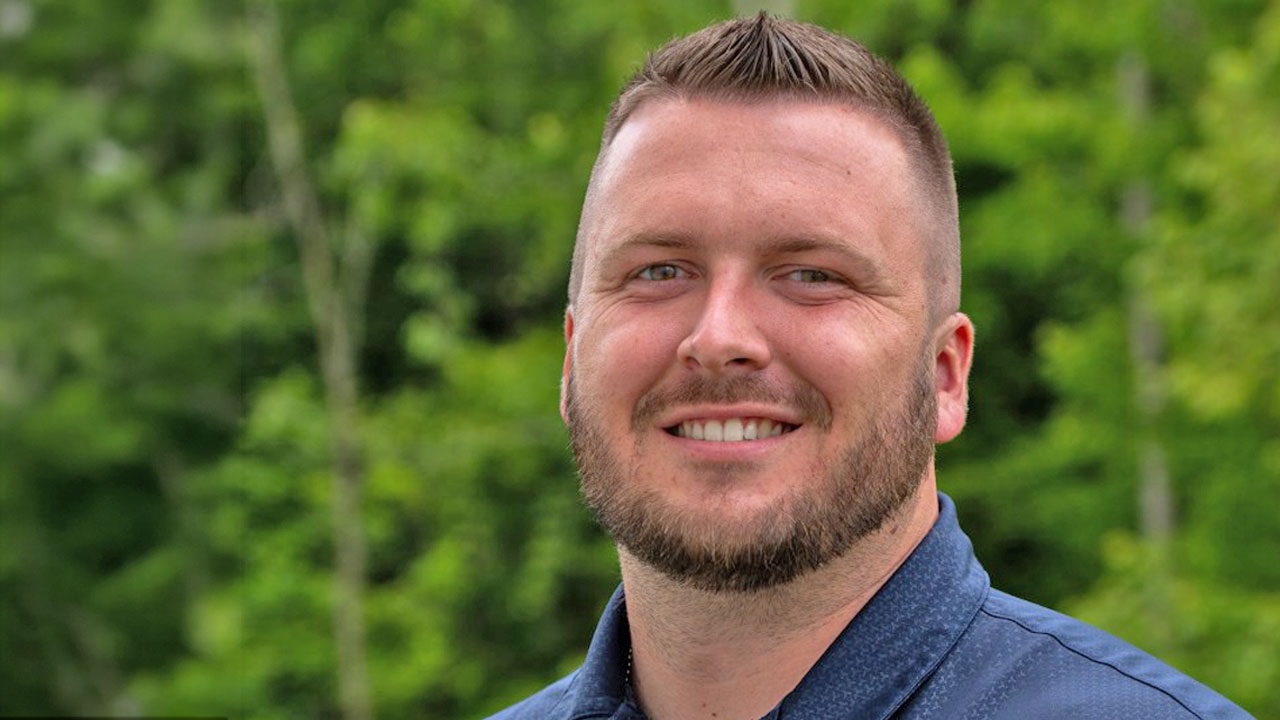
Today’s conversation is with Dr. Mark Frohlich. Mark is the CEO of Indapta Therapeutics, a biotech company launched in 2016 and focused on developing natural killer—or NK—cell therapies to treat cancer and autoimmune diseases. The company has roots at Michigan State University, where one of its early founders was a former faculty member. I think you’ll enjoy this conversation—we talk about Mark’s background, Indapta’s technology, and where the company is headed. So, let’s jump in.
Today I’m joined by Dr. Mark Frohlich, CEO of Indapta Therapeutics. As I mentioned, Indapta was founded in 2016 and is developing natural killer cell therapies for cancer and autoimmune diseases, with deep roots at Michigan State through founder Dr. Sungjin Kim, a former MSU faculty member.
And just to say this up front: the MSU Research Foundation, through our venture funds, is an investor in Indapta Therapeutics, and nothing in this conversation should be taken as legal or investment advice.
Mark, welcome.
Mark Frohlich:
Thanks, Dave. I appreciate the opportunity.
David Washburn:
You’ve been with Indapta for about three years. Can you start by sharing a little about your background and how you ended up here?
Mark Frohlich:
Sure. I’m a medical oncologist by training, and I’ve spent most of my career working on cell therapies. I left academia in the early ’90s and worked at several biotech companies including Excyte, Dendreon, Juno, and Pac Pharma, and later consulted for a dozen others. Everything I’ve done has revolved around some form of cell therapy.
What drew me into this field in the first place was frustration. When I trained, cancer treatment was largely chemotherapy and radiation, and clinical research mostly meant mixing and matching chemo drugs with limited success.
What really caught my attention—both in the lab and in clinical trials—was immunotherapy: the idea that you could harness the patient’s own immune system to fight cancer, with fewer side effects than traditional treatments. That was a breakthrough concept for me.
I always thought I’d stay in academic medicine, but I realized that most of the translation from discovery to patient care actually happens in biotech. And it’s been incredibly gratifying.
When I started my career, I believed our growing scientific understanding would translate into real improvements in patient care—and it has. Today, immunotherapy is part of the standard treatment for many cancers. Ten or fifteen years ago, that wasn’t true.
I was at Dendreon when the first immunotherapy was approved by the FDA. At the time, people were split into believers and non-believers. Now it’s just accepted as part of oncology. But there’s still a lot of work to do, and that’s what keeps me going.
David Washburn:
You’re right in the middle of the academic, clinical, and biotech worlds—which is an exciting place to be. I gave a short introduction, but I’d love for you to give the “Indapta pitch” in your own words.
Mark Frohlich:
Most of my career has been focused on T cells, which we’ve traditionally thought of as the immune system’s main workhorse. But over the last decade, there’s been growing evidence that natural killer cells—NK cells—have a powerful and very different way of targeting cancer.
What’s unique about NK cells is that they don’t need to be “trained” on a specific target the way T cells do. They have built-in sensors that help them distinguish between healthy and abnormal cells.
Many groups have tried giving donor-derived NK cells to patients, and one big advantage is safety. Unlike CAR-T therapy, you typically don’t see cytokine release syndrome or severe neurologic side effects. That’s a big deal, because it means you don’t necessarily need a specialized hospital unit to administer the therapy.
That’s what really drew me to Indapta: the possibility of creating an off-the-shelf, safer cell therapy that could be delivered in community oncology settings—not just elite medical centers.
Sungjin Kim’s team at MSU discovered a very unique subset of NK cells, and the preclinical data showed these cells were far more potent than conventional NK cells. So when I saw that the biology made sense and the early data looked strong, it was easy to get excited about what could be possible for patients.
David Washburn:
Where is the company right now—from a clinical and partnerships perspective?
Mark Frohlich:
We’re in the clinic now, which is a huge milestone. We’re running our first Phase 1 trial in patients with lymphoma and multiple myeloma.
We started with a safety run-in—single dose, then multiple doses—and added interleukin-2 to support the cells in the body. We presented that data at the Society for Immunotherapy of Cancer and were very encouraged. Most patients responded.
In multiple myeloma, you track a blood marker called M protein. Most patients saw reductions, and some were dramatic—over 90%. That’s much stronger than what historically has been seen with NK cells alone.
Now, we’re combining our cells with FDA-approved antibodies to better target the cancer. For example: Anti-CD30 in lymphoma, Anti-CD20 in lymphoma, and Myeloma-specific antibodies for myeloma. We’re just now treating patients in those cohorts, so we’re hopeful the responses will be even deeper and more durable.
We also have an autoimmune program. There’s strong evidence that NK cells can selectively eliminate the immune cells that drive diseases like multiple sclerosis. We’ve cleared an IND and are moving into the clinic there as well.
And lastly, we’ve received funding from the Focus Fund at MD Anderson to study our approach in acute myelogenous leukemia, in combination with an immune engager.
We also announced a collaboration with Sanofi. They’re supplying both drug and funding to evaluate our cells with their myeloma antibody, Sarclisa.
On the funding side—because none of this happens without capital—we raised a $60 million Series A in early 2022 from a group of excellent investors: RA Capital, Leaps by Bayer, Pontifex, Vertex Ventures, the Myeloma Investment Fund, and MSU’s investment group.
That got us into the clinic and through manufacturing development. At the end of last year, we raised an additional $22.5 million in an extension to give us runway to reach these next key data readouts.
David Washburn:
How big is the company today?
Mark Frohlich:
We’re intentionally lean. We’re about a dozen full-time employees, supplemented by highly experienced consultants who are fully integrated into the team.
Having seen companies grow too fast and then downsize, we wanted a structure that gives us flexibility and financial discipline while still executing at a high level.
David Washburn:
Are you mostly West Coast-based?
Mark Frohlich:
We’re largely virtual. Our lab is in Houston, where donor screening and early process development happen. The rest of the team is spread across the West Coast—Seattle, the Bay Area, Southern California.
David Washburn:
Is MSU’s IP the main foundation of the company?
Mark Frohlich:
Yes. The foundational IP comes from Sungjin Kim’s work at MSU. Since then, we’ve built an extensive IP portfolio around manufacturing, clinical uses, and combination strategies, both in the U.S. and internationally.
David Washburn:
How do you think about CAR-T and checkpoint inhibitors in relation to your work?
Mark Frohlich:
We don’t see these as mutually exclusive. Each therapy has its place.
We’re particularly excited about combining NK cell therapy with T-cell-based approaches. NK cells can change the tumor environment—release cytokines, attract T cells, and help expose cancer signals to the immune system.
The long-term future is likely a sequence or combination approach: use NK cells to kick things off, then layer in T-cell therapies to create durable immune memory. We’re already discussing collaborations along those lines.
David Washburn:
My guest today has been Dr. Mark Frohlich, CEO of Indapta Therapeutics. Indapta is developing natural killer cell therapies to treat cancer and autoimmune disease by enhancing the immune system’s ability to target harmful cells.
Mark, thanks for spending time with us.
Mark Frohlich:
My pleasure. Thanks, Dave.