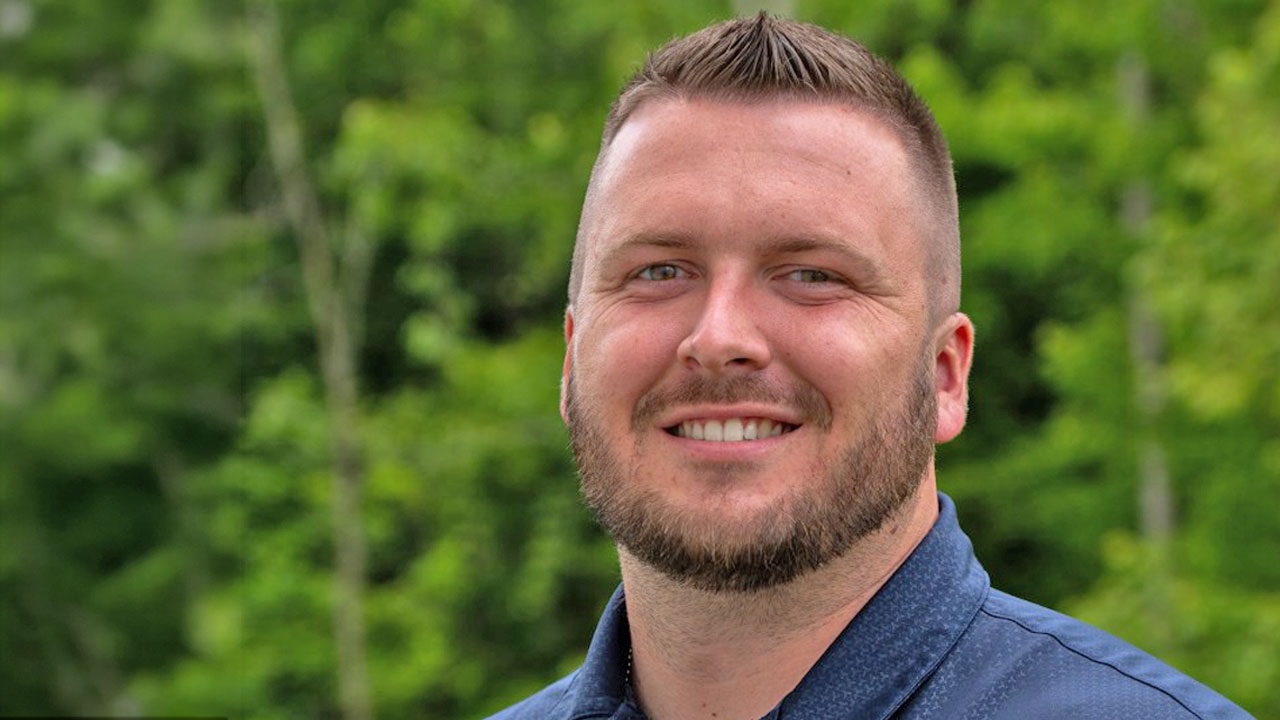
David Washburn:
Welcome to the MSU Research Foundation podcast. Today, my guests are Lisa Prasad, Vice President and Chief Innovation Officer at Henry Ford Health, and Jeff Wesley, Executive Director leading our venture team at the Foundation.
We’ll be talking about the partnership between Michigan State University and Henry Ford—how it’s fostering innovation, venture creation, and economic development. It’s a fast-moving and exciting conversation, so let’s jump in.
Lisa, before we get into the partnership, tell us a bit about your background—where you studied and how you found your way into healthcare innovation.
Lisa Prasad:
It’s been a long and winding road. I was an English major at the University of Michigan—not a doctor, not a technologist—just a proud liberal arts major. After undergrad, I earned my master’s at the University of Pennsylvania and worked in Philadelphia for several years before moving back to Michigan.
Professionally, I’ve always worked at the intersection of institutions, innovation, and impact—what I call the “three I’s.” Early in my career, I helped universities and health systems think differently about how to use their strengths—not just their research and real estate, but their roles in their communities.
At Penn, I worked on the West Philadelphia Initiatives, a model for how anchor institutions can drive community change. That experience hooked me. I fell in love with large, mission-based organizations and what happens when they open themselves up to collaboration.
So when Henry Ford came calling, it made perfect sense. It’s an organization with deep community roots and incredible potential to innovate. Now, in partnership with the MSU Research Foundation, my focus is building programs that connect startups with research and industry to improve care and opportunity right here in Detroit.
David Washburn:
That’s great context, especially the emphasis on partnership. We’re about four or five years into the MSU–Henry Ford relationship now. Could you summarize the 30-year collaboration that was signed in 2021?
Lisa Prasad:
Sure. The partnership establishes Michigan State University as Henry Ford Health’s primary academic partner. We each have other collaborators, but this is a deep, long-term alignment.
The idea was to bring together our strengths—Henry Ford’s patient care and data, and MSU’s expertise in engineering, business, and research. When you put all that under one umbrella, the potential to improve healthcare is enormous. The goal is simple: make two plus two equal five.
David Washburn:
Jeff, you’ve been part of this from the early days. Anything to add?
Jeff Wesley:
It’s been exciting from the start. You’ve got two institutions rooted in innovation, research, and education, and when we first connected, Lisa and I immediately saw opportunities to collaborate. Since then, our teams have worked hand in hand to bring ideas to life, and it’s been a fun, productive ride.
David Washburn:
Lisa, can you explain what Henry Ford Innovations is? How is it structured, and what kinds of work does your team do?
Lisa Prasad:
Henry Ford Innovations is a division within Henry Ford Health, not a separate entity. That integration helps us tap into the full expertise of the health system.
Innovation offices in healthcare generally follow one of three models:
- Venture-focused, aligned with finance and driven by investment returns.
- Technology-focused, aligned with IT and focused on developing or adopting new tech.
- Clinically-focused—and that’s us.
We focus on improving care quality, patient experience, and outcomes, while lowering costs. We’re a small full-time team—about ten people—but every project includes clinical champions from across the system. That’s how we build innovation teams that matter.
David Washburn:
Henry Ford also has a strong record in research funding. How does your group intersect with that side of the organization?
Lisa Prasad:
Henry Ford conducts roughly $200–250 million in research annually, and my office manages the technology transfer—turning discoveries into real-world applications. With our joint venture with Ascension Southeast Michigan, that base has nearly doubled, and the MSU partnership is helping us expand even further.
Jeff Wesley:
Lisa, I’ve heard the story that Henry Ford’s Innovation Institute was born after a big missed opportunity—something about robotic surgery?
Lisa Prasad:
Yes, that’s one of our “funny but painful” stories. About 20 years ago, a company developing surgical robots struggled to gain traction in cardiovascular surgery. One of our clinicians suggested trying it for prostatectomies instead—and it worked brilliantly. That became a multi-billion-dollar market, but Henry Ford didn’t see any return, not even a discount on the robots.
That experience was a wake-up call: we wanted to keep sharing knowledge for the greater good—but also ensure we could reinvest some of that value back into better patient care. That realization led to forming our Innovation Institute.
David Washburn:
Let’s talk about the Innovation Hub that was recently announced. What is it, and how did it come about?
Jeff Wesley:
Lisa and I started working together about two and a half years ago, and we immediately saw synergy. Our venture team had the startup formation experience, and Henry Ford had the clinical inroads. Together, we were soon running about 18 pilot projects inside the health system.
It just made sense to formalize it—to create a brand and structure for collaboration. That’s how the Innovation Hub was born. It’s already operational, already delivering impact, and we’re just getting started.
Lisa Prasad:
Jeff summed it up well. For us, innovation isn’t optional—it’s a strategic necessity. By 2035, there will be more Americans over 65 than under 18, which means more patients needing care and fewer people to provide it.
We have to find new models—AI, automation, new technologies—to deliver better care more efficiently. Partnering with startups allows us to co-create solutions that fit our needs and strengthen our regional ecosystem.
Jeff Wesley:
And it’s working. We ran our Conquer Accelerator at Henry Ford, and out of the last cohort, five healthcare startups participated—three are now running pilots inside Henry Ford Health. That’s a remarkable hit rate.
Lisa Prasad:
It really is. Those companies are strong because of the hands-on support they received through the accelerator. This partnership gives founders access to real clinical settings, which accelerates their learning and impact.
David Washburn:
Let’s shift to the new venture fund that launched alongside the Hub. What’s the concept behind it?
Lisa Prasad:
We’d been exploring direct investment for a while, but we lacked the in-house expertise. When this partnership formed, it clicked. The MSU Research Foundation is the largest early-stage investor in the Midwest, and combining your investment experience with our healthcare network just made sense.
So we launched a $10 million joint venture fund between Henry Ford Health, Michigan State University, and the MSU Research Foundation. It wasn’t an easy time economically to make that commitment, but both CEOs immediately saw the long-term value.
Jeff Wesley:
Exactly. It’s another step forward for the partnership—moving from pilots and programs to co-investing in the next generation of healthcare companies. We already have a pipeline forming, and it’s attracting national and even international attention.
Lisa Prasad:
Speaking of international, that’s another exciting piece. We’ve been connecting with global health tech ecosystems—particularly in Israel, Ireland, Central and Eastern Europe, India, and even Australia.
These startups often have incredible technologies but need help entering the U.S. market. We can provide that soft landing—helping them establish here in Michigan, run their first pilots at Henry Ford, and ultimately grow jobs and investment here.
Jeff Wesley:
Exactly. For many of them, this partnership is the gateway into the U.S. healthcare system. The fact that we’re seeing this level of inbound interest so early tells us we’re onto something.
David Washburn:
For listeners who want to learn more, where should they go?
Jeff Wesley:
Visit the MSU–Henry Ford partnership page on the MSU Research Foundation website. There’s a section on Innovation, where you’ll find details about the Hub and Venture Fund. You can also reach out to our teams—Matt Okoneski and Tom Stewart on our side, and Xander and Tarig at Henry Ford.
David Washburn:
Before we wrap up—any closing thoughts?
Lisa Prasad:
Just this: the future of healthcare isn’t about technology for technology’s sake. It’s about people—patients who want care that fits into their lives, and clinicians who want to spend more time healing and less time on paperwork.
We’re focused on innovations that make care better, faster, and more affordable. If you’re building something that can do that, we’d love to hear from you.
Jeff Wesley:
I couldn’t agree more. Healthcare is a sector where you can truly feel the impact of your work. It’s rewarding to be part of something that’s improving lives, and I’m excited for what’s ahead.
David Washburn:
Well said. Lisa, Jeff—thanks for joining me. We’ll have you both back soon to share the next chapter of this collaboration.